



Superyacht Yacht Hull Wrapping
When it comes to yacht wrapping, the hull is typically the first area people think of. However, the scale of hull projects can vary enormously, ranging from smaller recreational craft through to superyachts exceeding 100 metres in length.
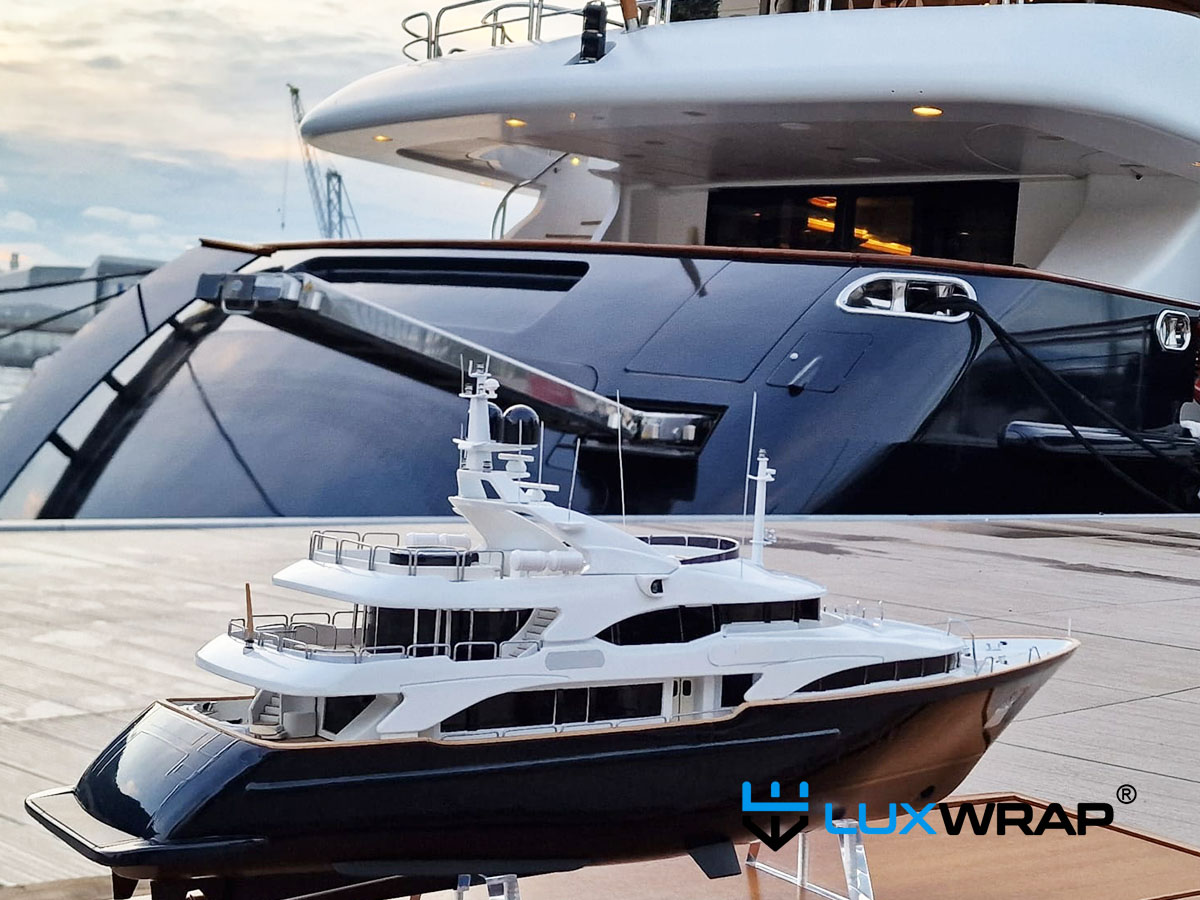
Because vessel sizes vary so widely, hull wrapping projects can differ just as significantly as painting, fairing, or engineering works. A yacht’s size, displacement, and overall value will ultimately determine the calibre of contractor required. It is therefore essential that any company quoting such work understands how to properly assess vessels of the relevant scale and can demonstrate proven experience delivering projects of comparable complexity.
Preparation: An Important Point
Importance of Surface Condition
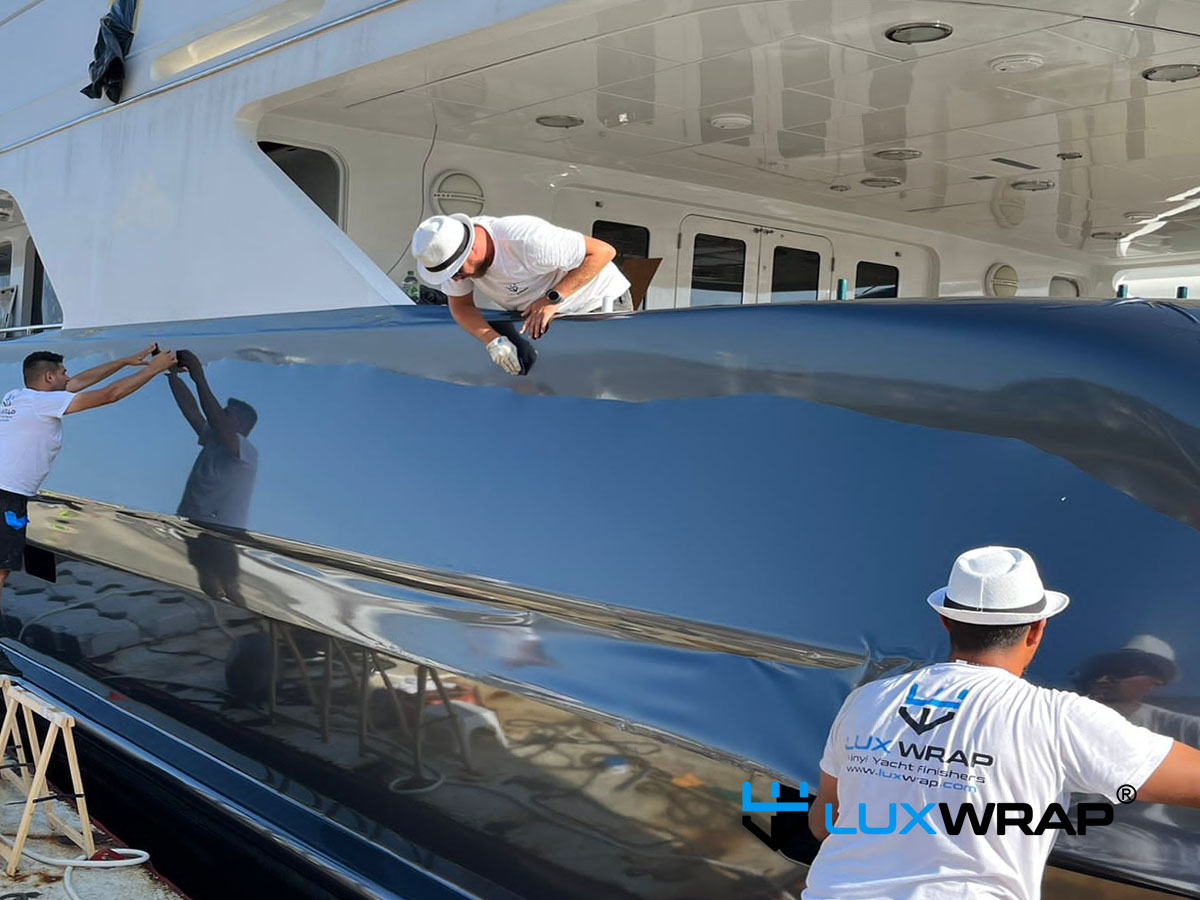
Vinyl does not conceal imperfections. Scratches, dents, or surface defects beneath the film will remain visible once installed. More importantly, any damage that allows water ingress must be properly repaired beforehand, and flaking or exfoliating paint cannot be wrapped at all. These areas must first be sanded back to a stable substrate before installation can begin.
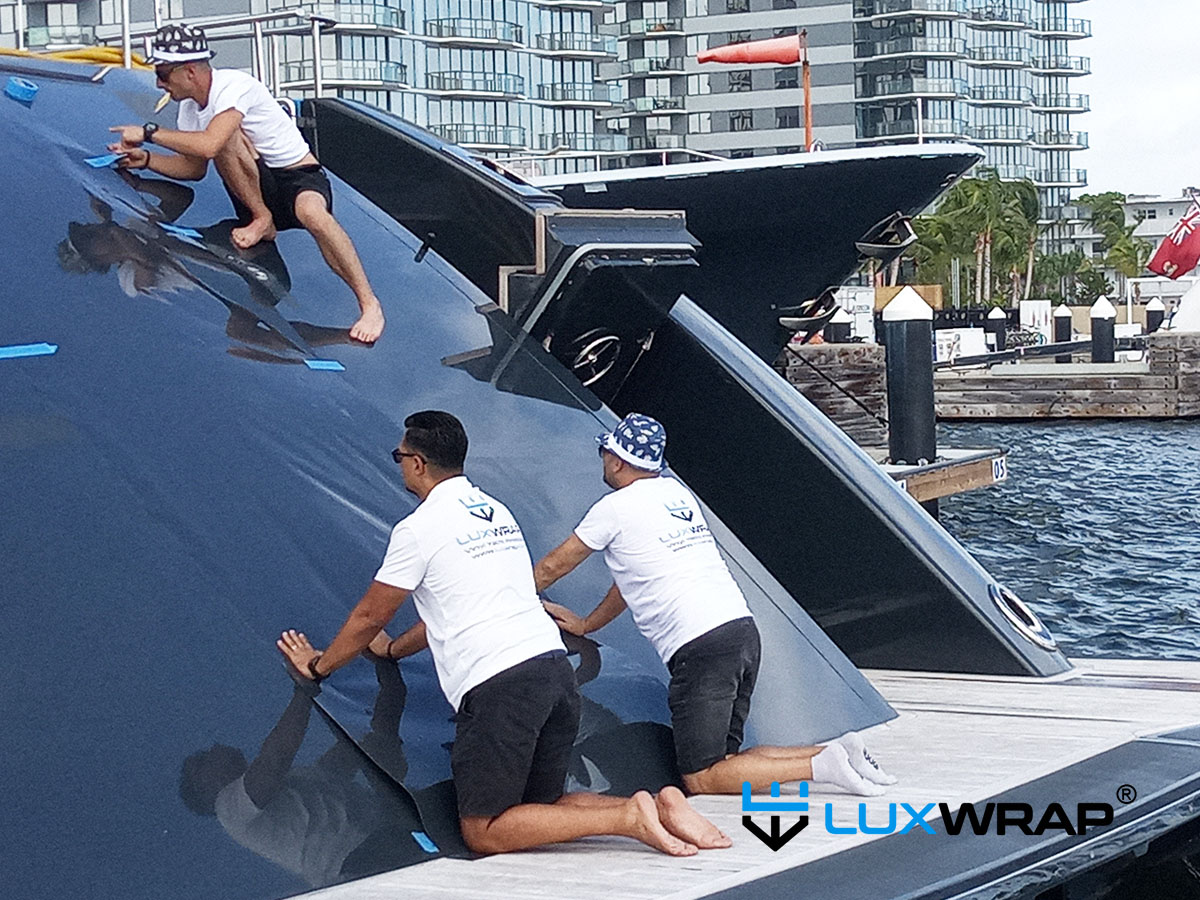
A practical approach is to allocate a crew member to carry out an early inspection of the hull, marking any defects with tape so they can be addressed in advance. Once these areas are ground out, filled, and sanded, the surface will be ready for wrapping. This relatively small task can make the difference between a project that proceeds smoothly and one that loses valuable time resolving preventable issues.
Infrastructure and Logistics
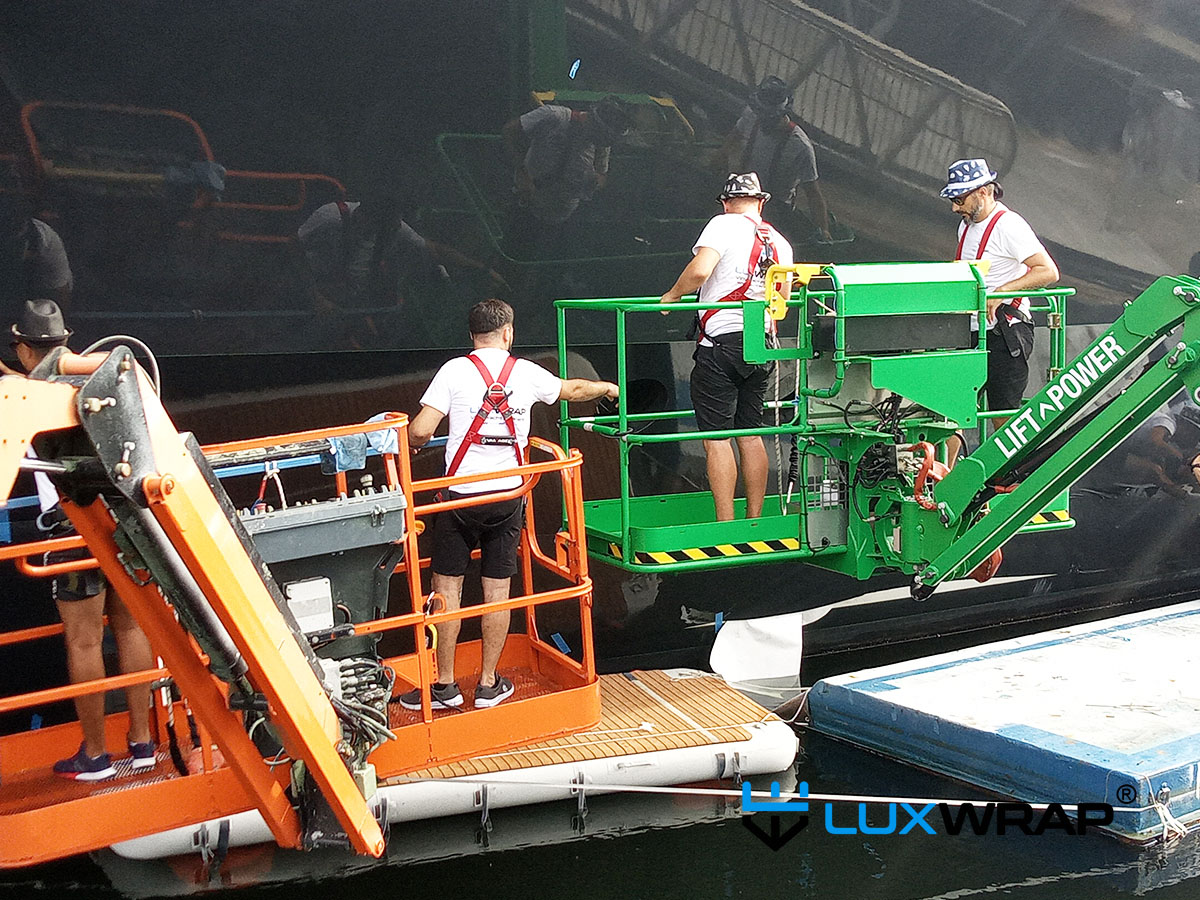
Crew should coordinate early with both the wrapping contractor and the shipyard to confirm that all necessary access infrastructure is arranged before the installation team arrives. Equipment such as floating rafts, ladders, planks, scissor lifts, or cherry pickers must be properly planned in advance.
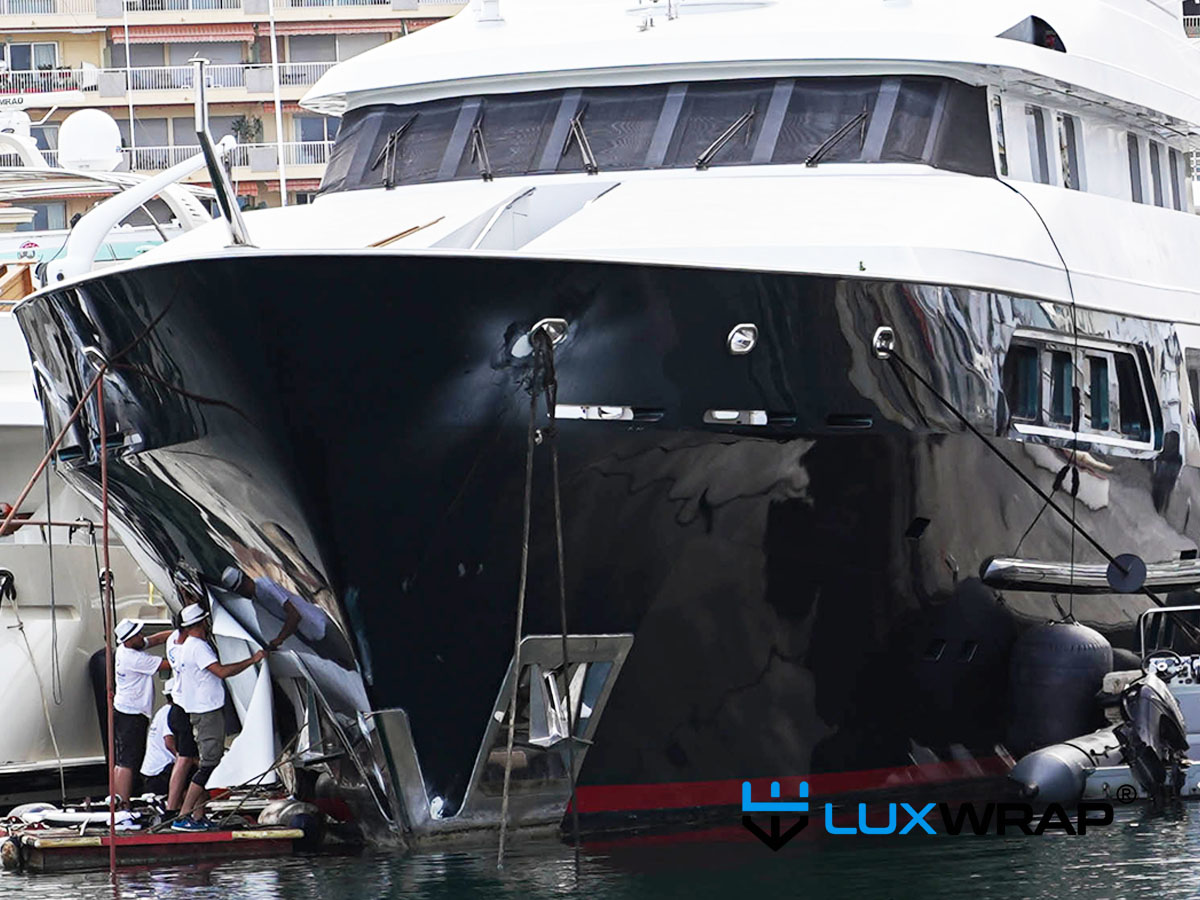
Over many years working on vessels of every size and configuration, the LuxWrap team has developed the practical experience required to overcome complex access challenges. When the conditions allow it, our installers have the capability to safely reach and wrap virtually any part of a yacht’s hull.
Communication is Key
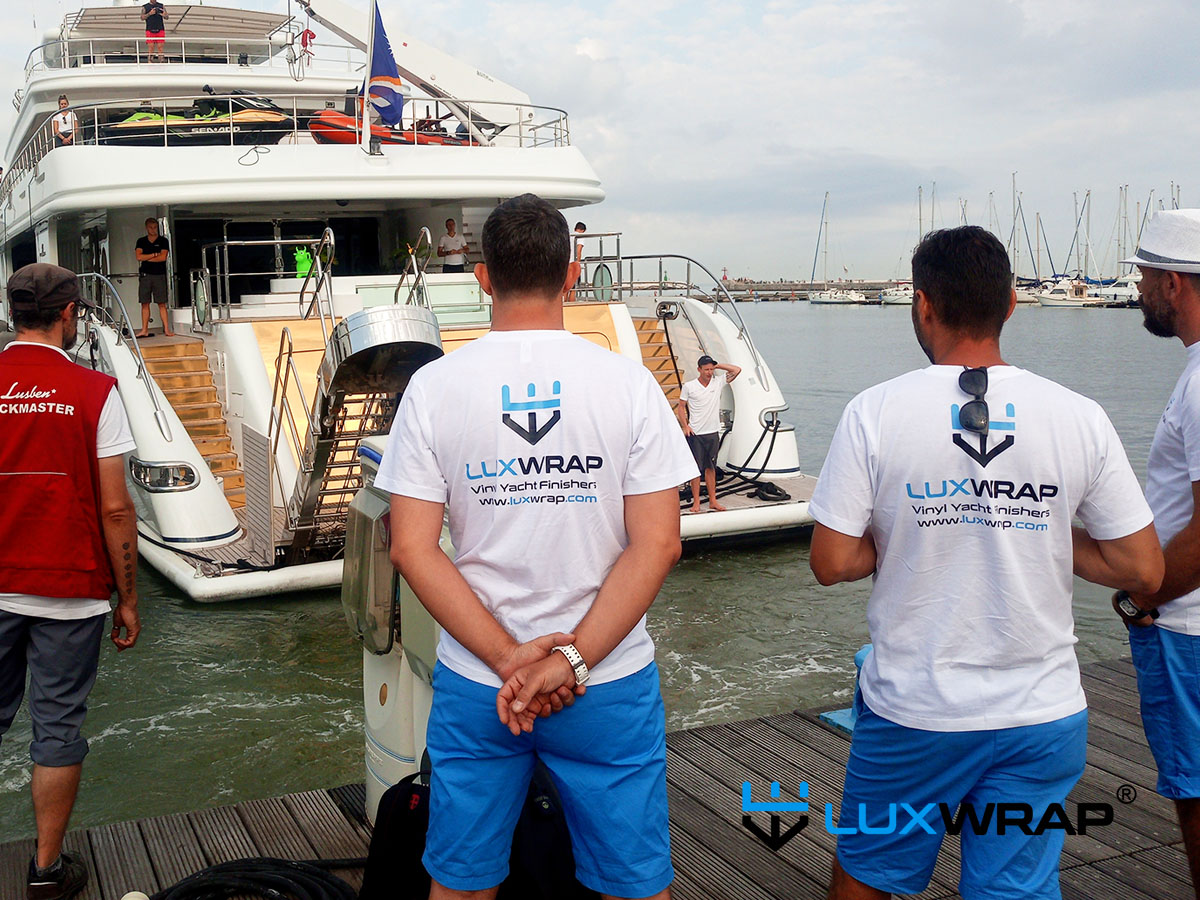
While we understand that preparation is sometimes incomplete or delayed, and we are able to assist where necessary, resolving these issues during installation inevitably increases costs compared with having the work completed beforehand.
The most successful projects are those where preparation and communication are handled properly in advance. When expectations are clearly aligned between crew, shipyard, and contractor, installations are far more likely to be completed efficiently, within budget, and to the highest possible standard.
Materials: A General Point
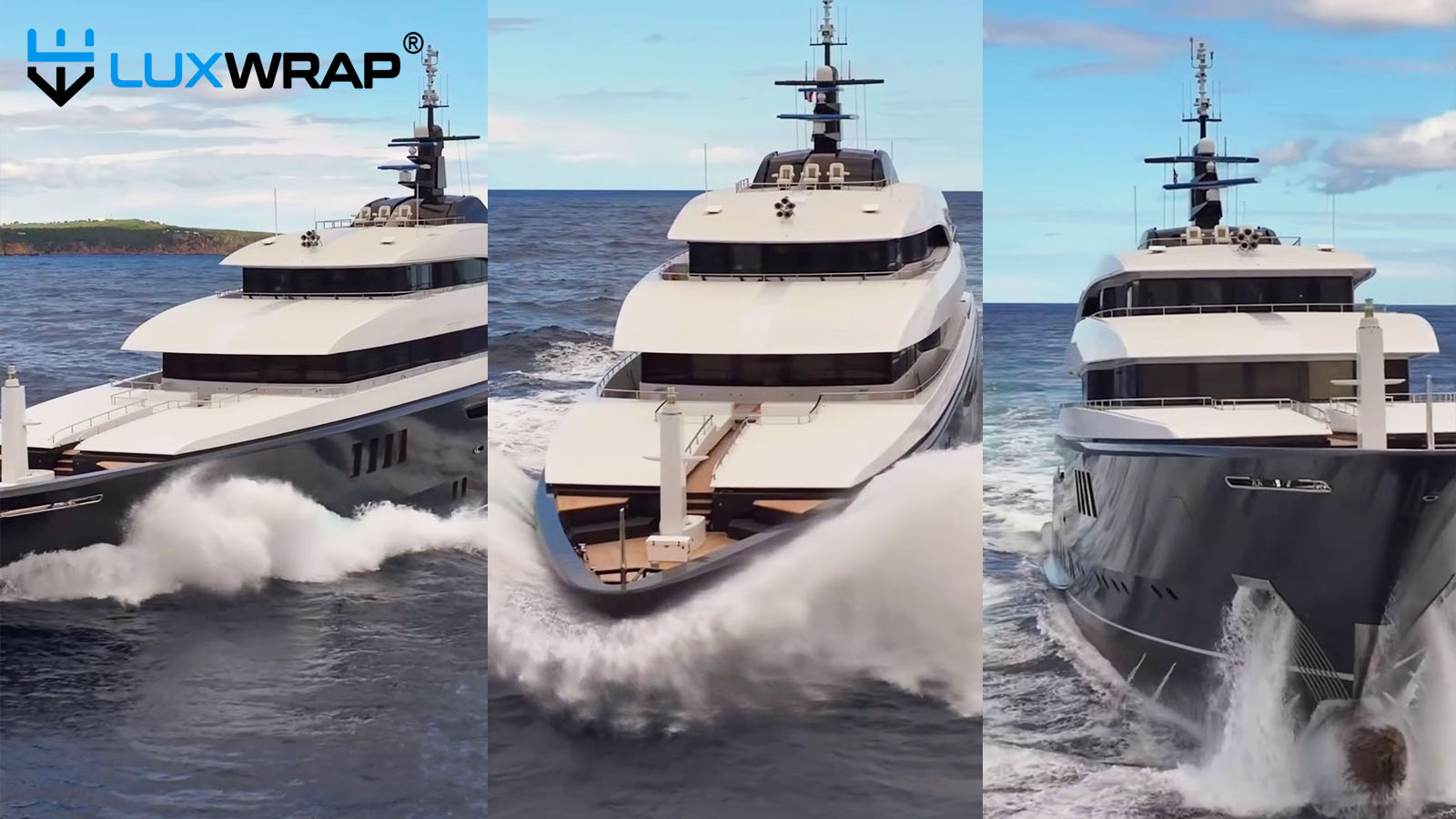
Material selection is critical regardless of vessel size. Contrary to common belief, performance is not determined purely by brand recognition.
Some large manufacturers have demonstrated inconsistent durability between colours or production batches, while certain lesser-known materials have proven exceptionally reliable in real-world conditions, including vessels that have crossed oceans multiple times.
For neutrality we will not list specific brands here. What matters is that the materials recommended have genuine real-world performance history rather than relying purely on marketing claims. When LuxWrap undertakes high-end installations, clients can be confident that every material used has already been tested extensively on vessels of many shapes, sizes, and operating conditions.
It should also be clearly understood that vinyl is not intended to replace paint entirely. As we have always maintained, vinyl complements paint rather than substituting for it. Setting expectations with this principle in mind is essential.
Hulls 30–60 Metres
Why Wrap a Superyacht Instead of Paint?
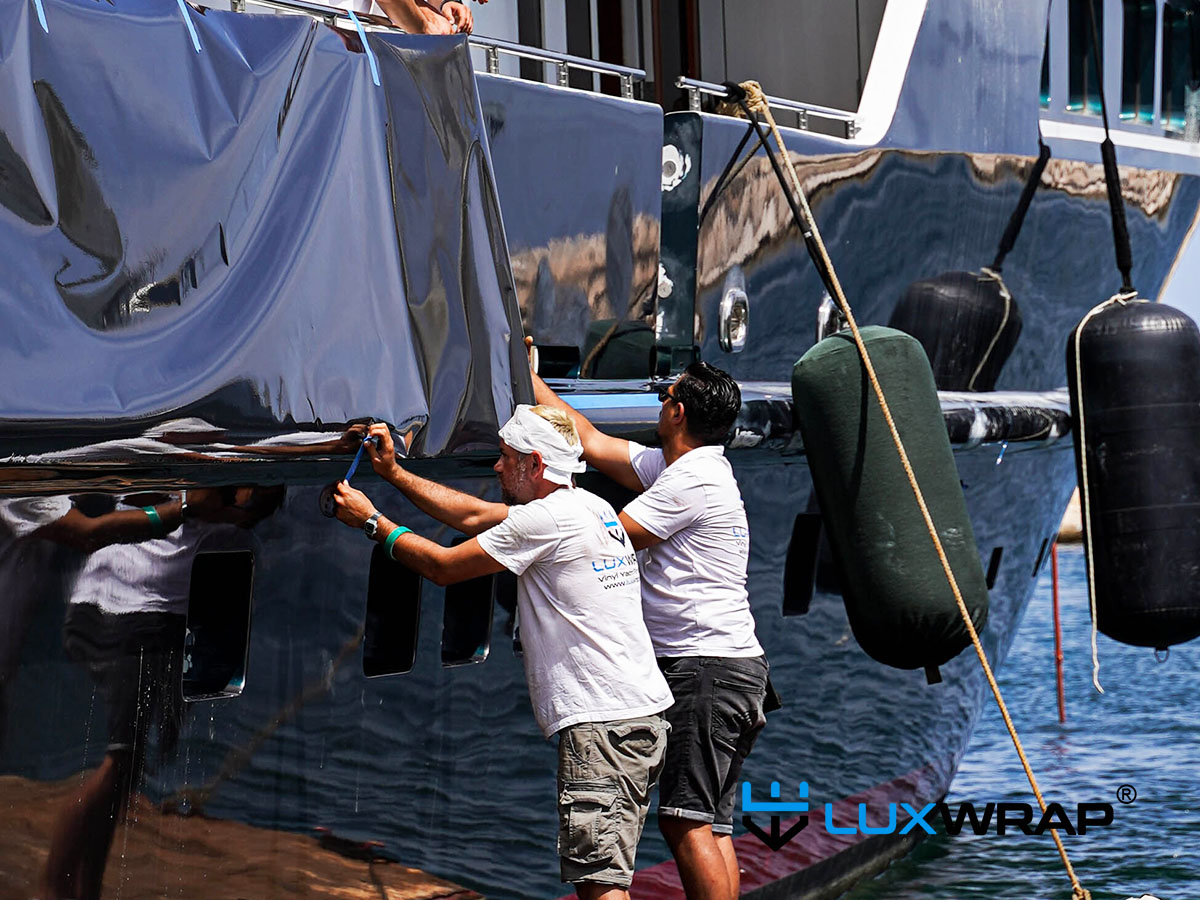
Captains and crew frequently ask why an owner might choose to wrap a yacht of this size rather than repaint it. In most cases the answer comes down to time and cost. Repainting vessels in this size bracket can require very significant budgets and extended yard periods.
Some owners wish to avoid this expense altogether, while others simply want to delay repainting until a planned survey or refit period. In other cases, owners may wish to trial a new colour scheme before committing to it permanently in paint.
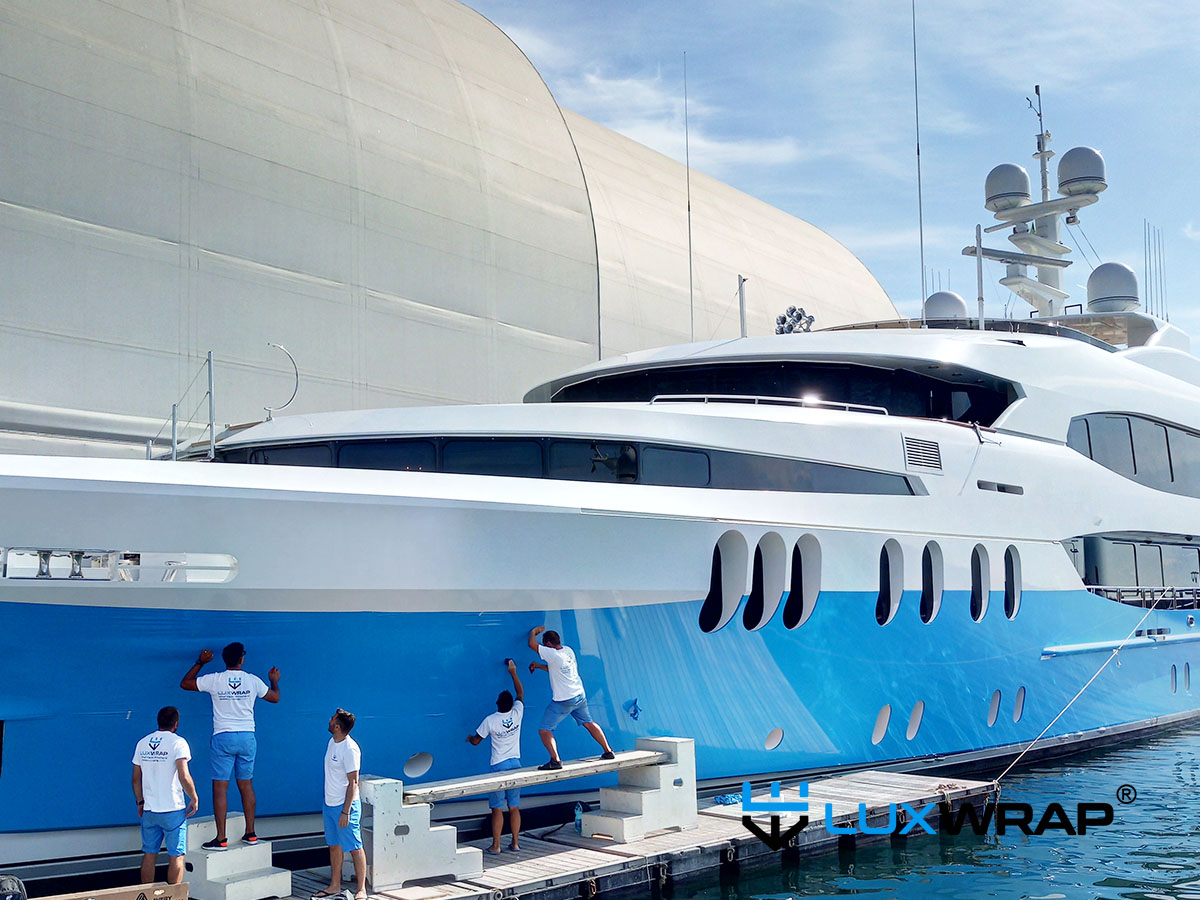
A common scenario is a yacht approaching its next five-year survey where the paintwork has already begun to look tired. If the vessel remains active on charter, maintaining a pristine appearance becomes important.
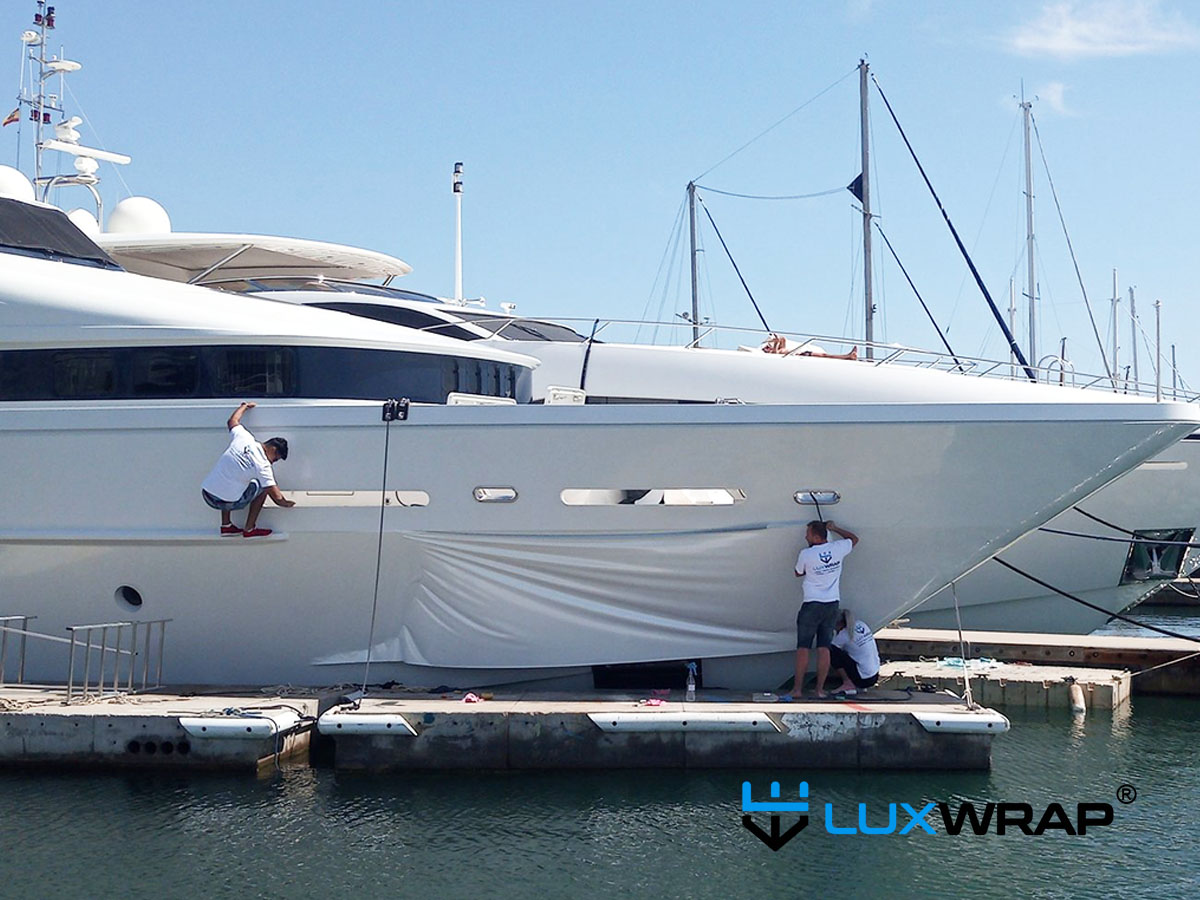
Wrapping can provide a finish that closely resembles paint, lasting several years at a fraction of the cost of a repaint. In many cases the work can be completed with the vessel afloat, and occasionally for less than the cost of simply hauling the yacht from the water.
How Are Larger Yachts Wrapped?
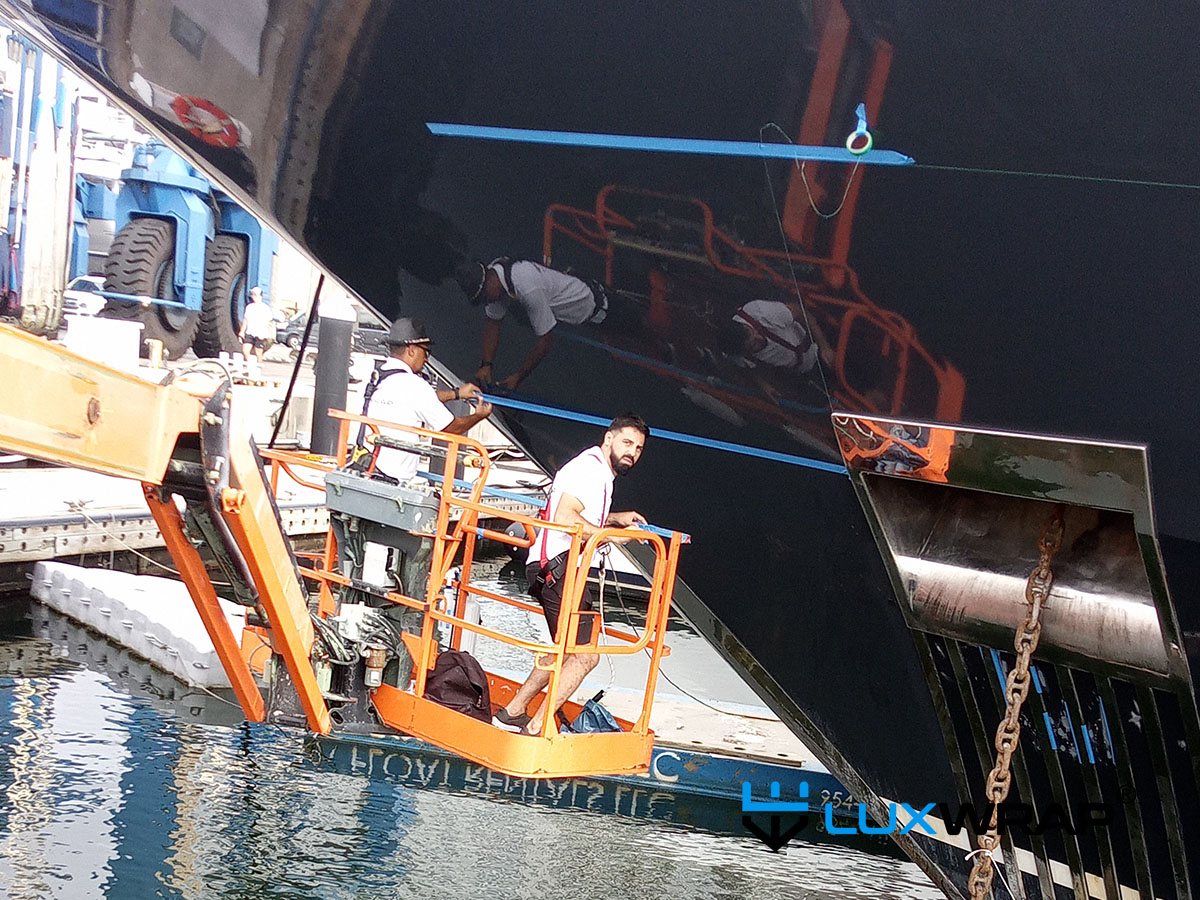
Quoting and executing a hull wrap on yachts above approximately 40 metres is very different from working on smaller boats, largely due to the substantial variations in tonnage, hull form, and access requirements.
Carrying out installation while the vessel remains in the water can significantly reduce shipyard costs. However, only a limited number of contractors possess the experience required to deliver projects at this scale. Owners commissioning such work should therefore ensure the contractor has the capability to complete the project reliably, on schedule, and within budget.
KEY Considerations
Not every hull wrap is intended to change the colour of the yacht. Many owners request wraps designed to match their existing paintwork.
In some cases a suitable vinyl colour can be sourced directly from standard production ranges. In others, a custom colour-matched film must be manufactured — something that is generally only viable on larger yachts where minimum production volumes can be justified.
One factor to consider when changing colour is the visibility of the underlying paint should the film become damaged. For example, a dark wrap applied over a white hull will reveal the lighter colour if scratched. These areas can usually be repaired by patch replacement, and we often train crew members to carry out these minor repairs themselves. With colour-matched vinyl, such damage is typically far less noticeable.
In Water vs. Out of Water
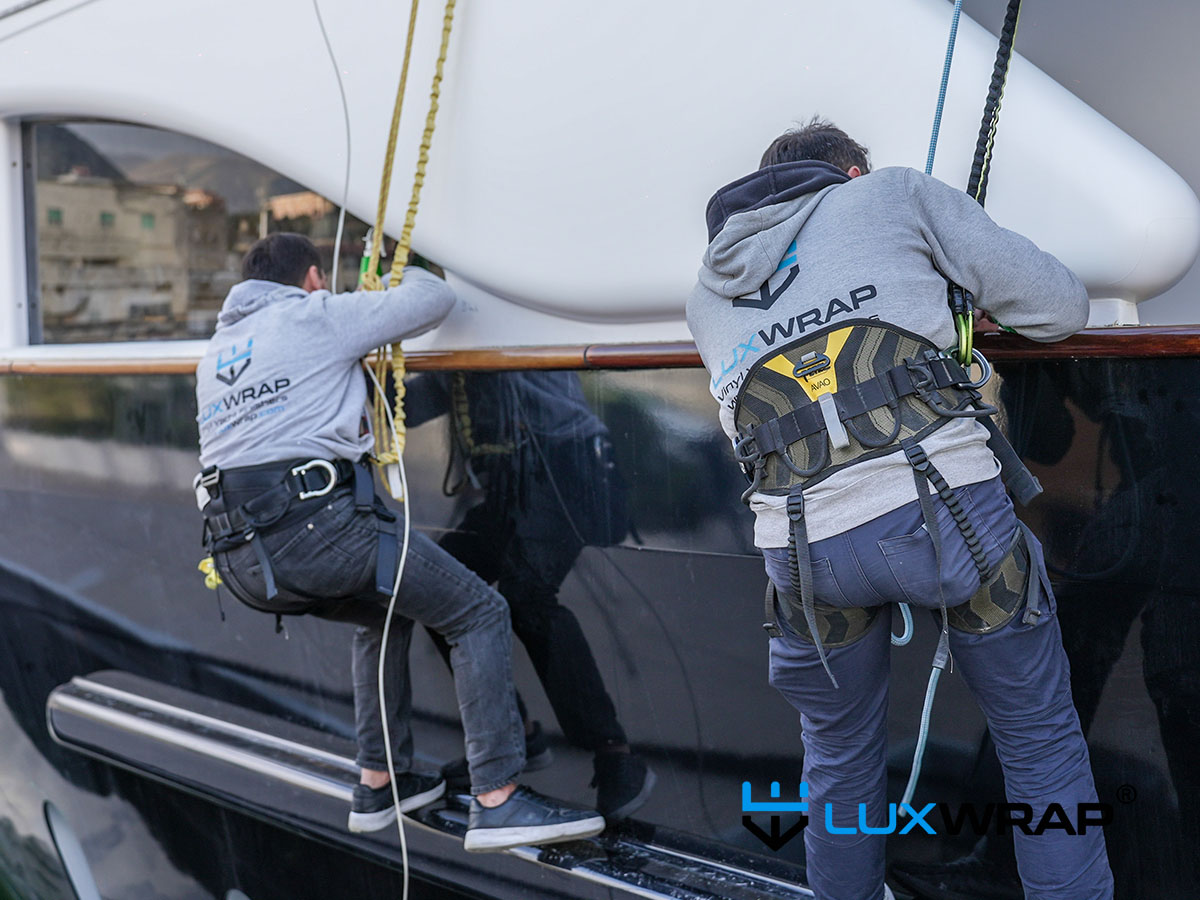
Wrapping afloat is often quicker and avoids many shipyard issues, provided weather and access are suitable. Yard-based projects, on the other hand, may involve larger equipment and can be slowed by dust, wind, and other third-party activity. Good results can be achieved in both environments, and the choice depends on management's preference.
Who Should You Hire?
Above 40m, the financial stakes, deadlines, and ancillary costs increase significantly. A local wrap shop may be capable with smaller boats, but is unlikely to be considered reliable at this level. Owners and managers must evaluate the market carefully, prioritising companies like LuxWrap, with a proven record of large-scale projects delivered by experienced, consistent teams.
Hulls 60–100+ Metres
IT IS FAIR TO SAY THERE IS NO UPPER LIMIT ON SIZE
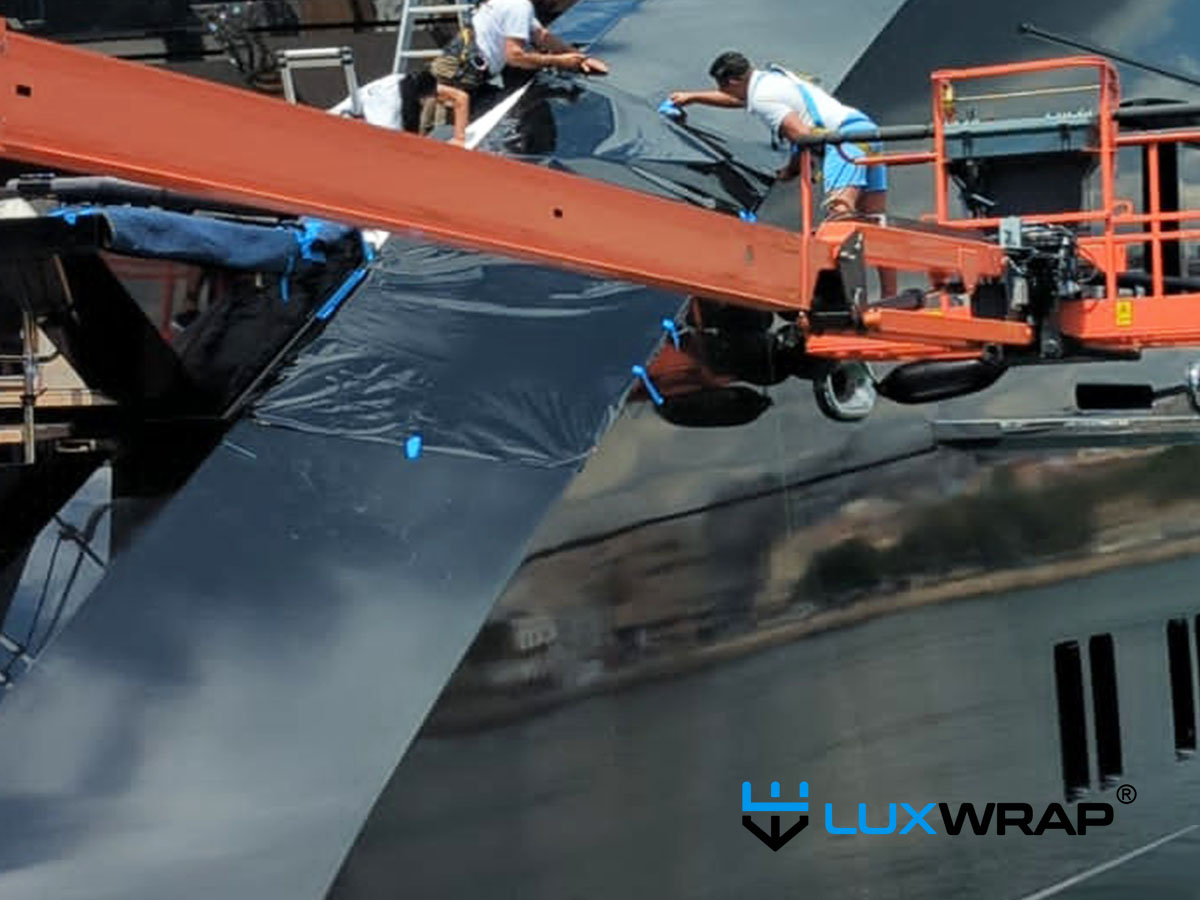
A growing number of mega-yachts are now choosing hull wrapping for a range of practical reasons. At lengths of 100 metres and beyond, the cost savings compared with repainting can be considerable.
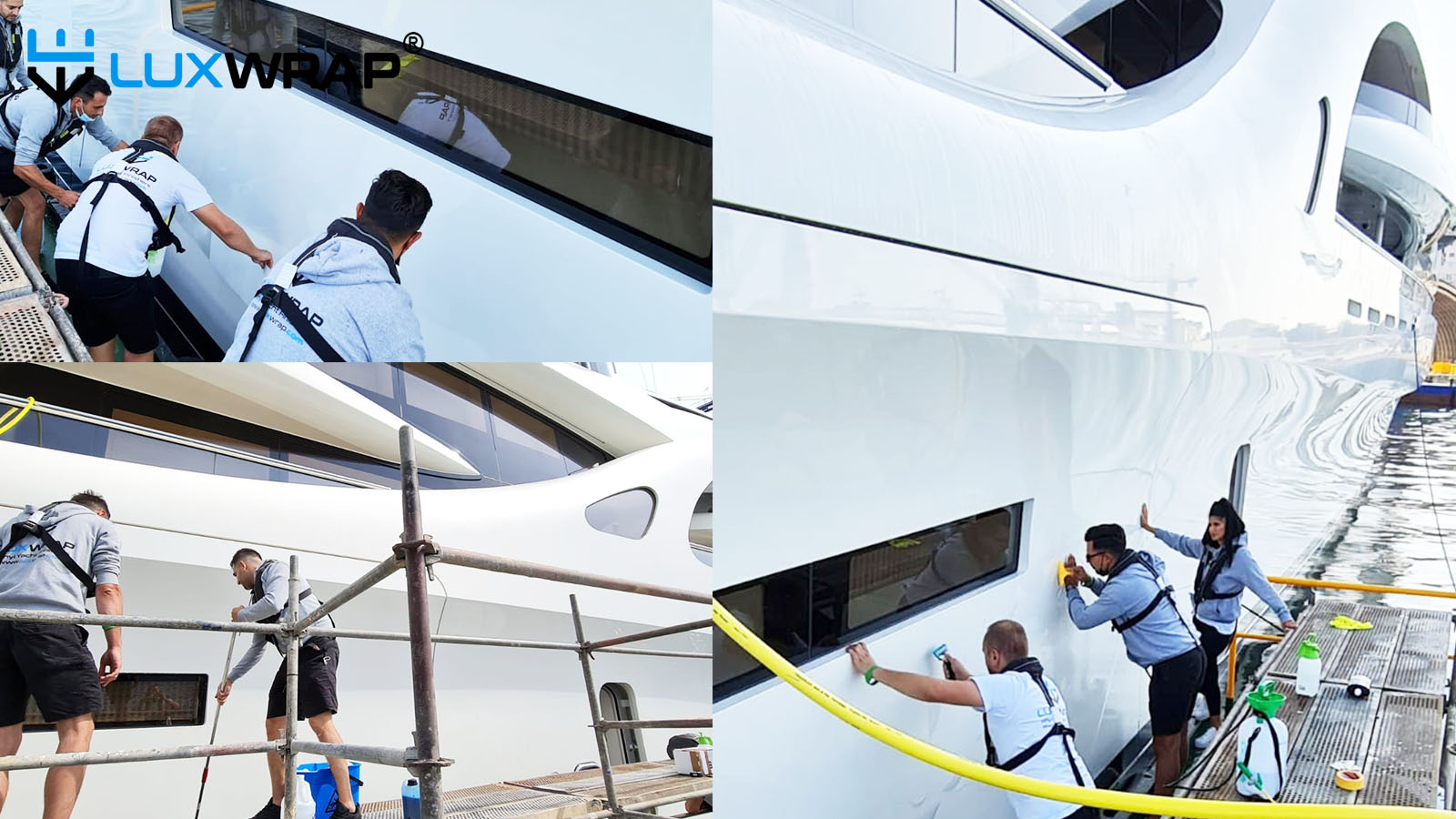
Similar to large superyachts, which are often wrapped to delay a repaint, the management of very large mega-yachts also consider hull wrapping to protect and preserve a brand-new paint job. This is usually done with vinyl or Paint Protection Film (PPF) or a combination of both, especially in high-traffic areas most prone to wear and tear.
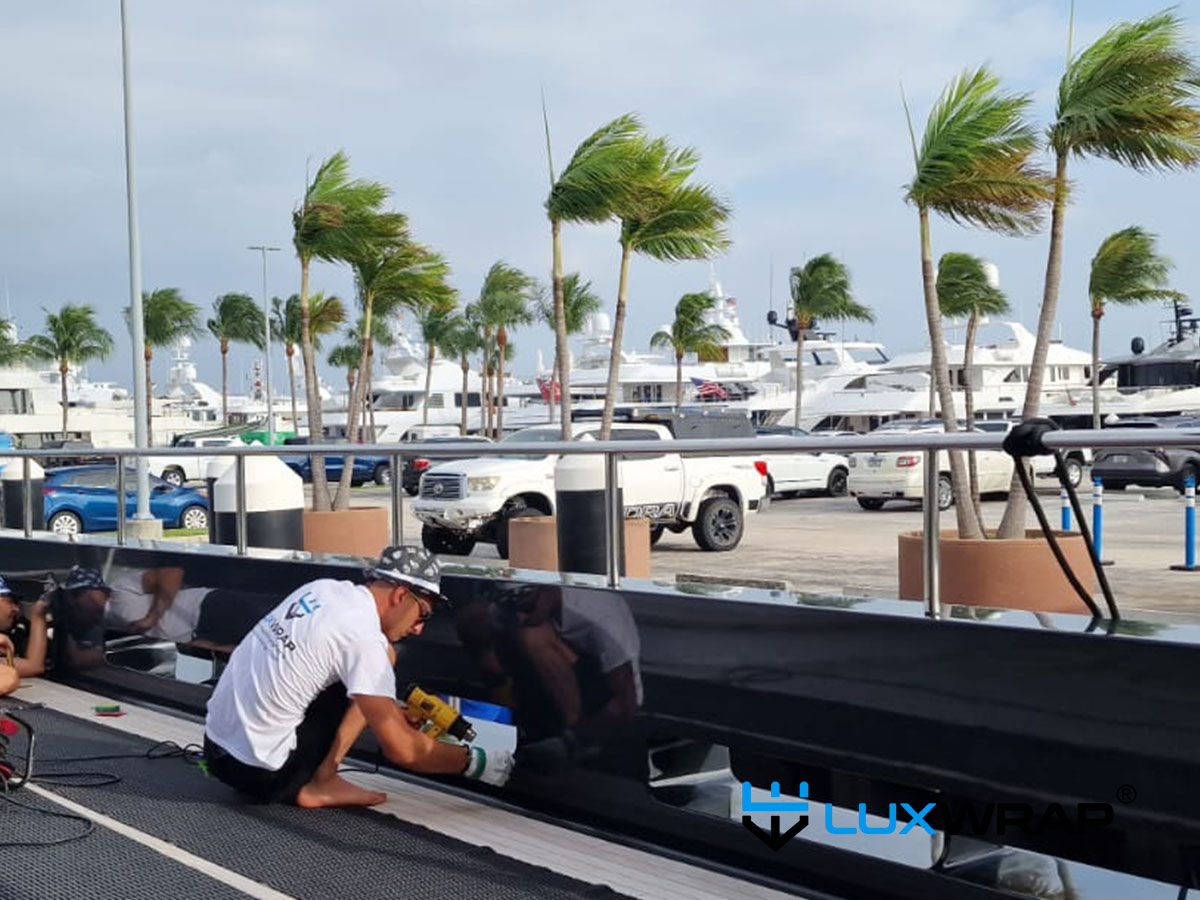
Considering all of the above, hull wrapping should not be viewed as a one-size-fits-all service. The scale, complexity, and objectives of each project vary significantly, and the approach must therefore be adapted to suit the vessel’s size, value, and operational requirements.
For smaller yachts, wrapping offers a flexible and economical method of refreshing or restyling a vessel’s appearance. For large superyachts, it provides a practical alternative to repainting — bridging the gap between refits, reducing downtime, and maintaining high aesthetic standards.
Regardless of size, selecting the right contractor remains the most important factor. For simple projects, a local provider may be sufficient. For complex or high-value vessels, proven specialists such as LuxWrap are essential.
When executed correctly, yacht hull wrapping has become an increasingly valuable tool in modern yacht maintenance and presentation. With extensive experience across vessels of every size and configuration, LuxWrap continues to set the standard for how these projects should be delivered.
LuxWrap® is a leading specialist in superyacht wrapping and surface protection, delivering projects for new-build and operational vessels worldwide. If you would like to discuss a potential project or request a quotation, please contact us.
📞 Contact LuxWrap
Tel: +44 (0)208 068 7468
🌐 www.luxwrap.com