Interior Yacht Wrapping
When a yacht’s interior begins to feel dated, worn, or simply no longer aligned with an owner’s vision, the traditional solution has always been a full interior refit. These projects can involve extensive carpentry, sanding, varnishing, paintwork, and the removal or replacement of cabinetry and upholstery.
Interior wrapping is now widely recognised as a practical alternative to traditional yacht refits, allowing interiors to be transformed without the time, cost and disruption associated with joinery replacement, painting or full refurbishment cycles.
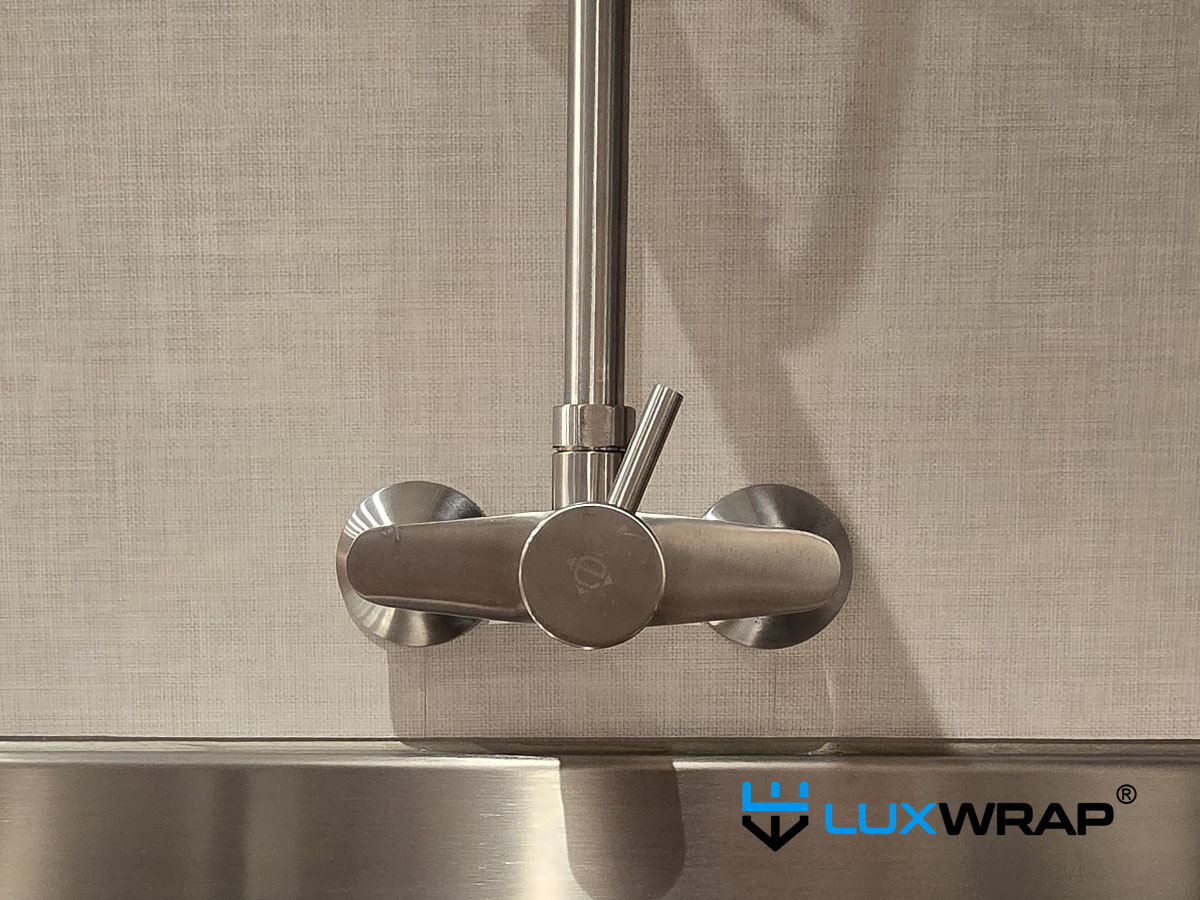
While such refits remain an important part of yacht refurbishment, a highly effective alternative has emerged that is now widely used across modern superyacht refits in recent years: interior wrapping using architectural films.
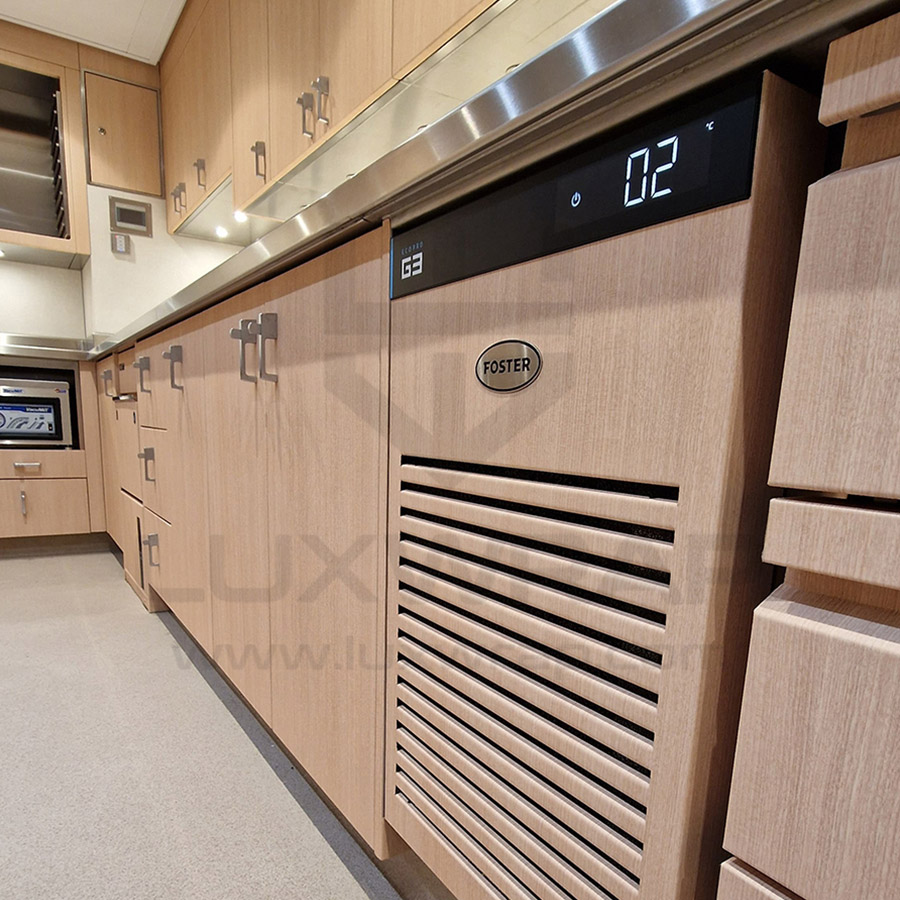
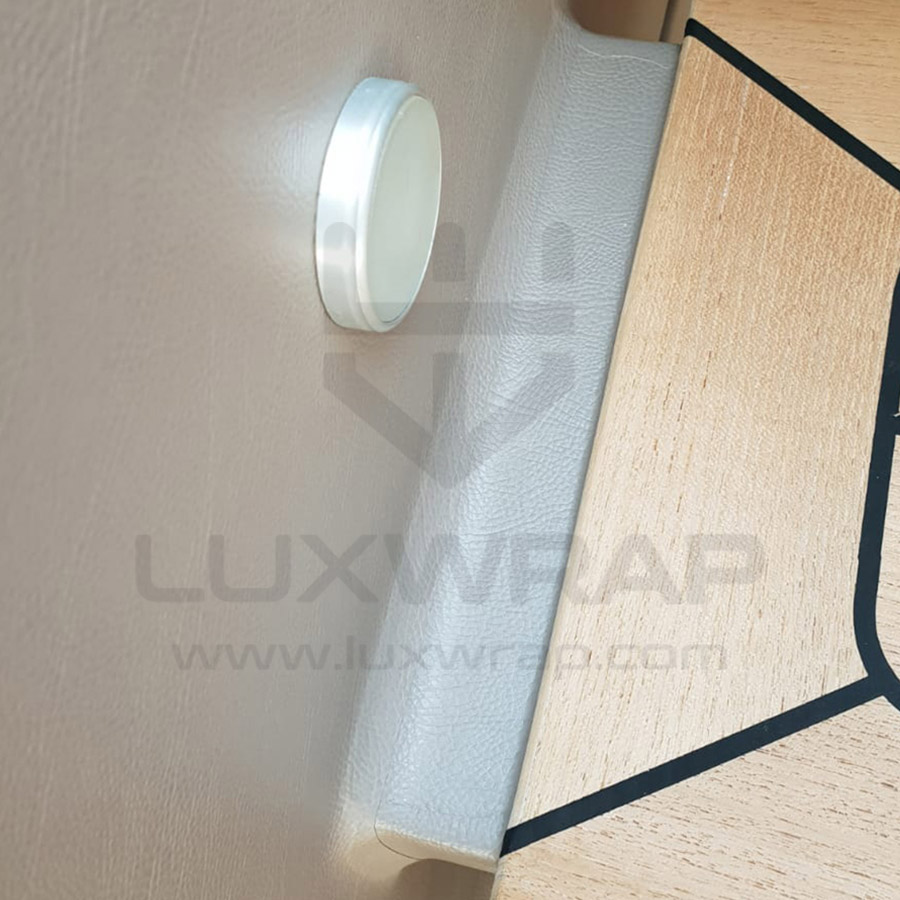
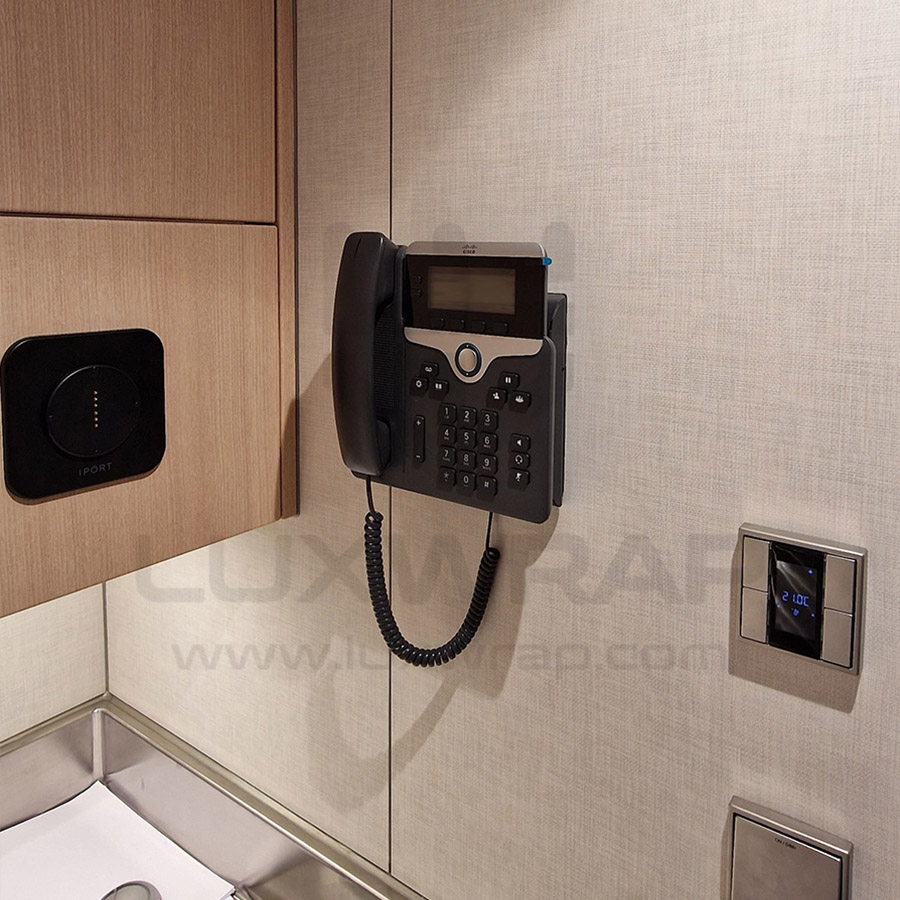
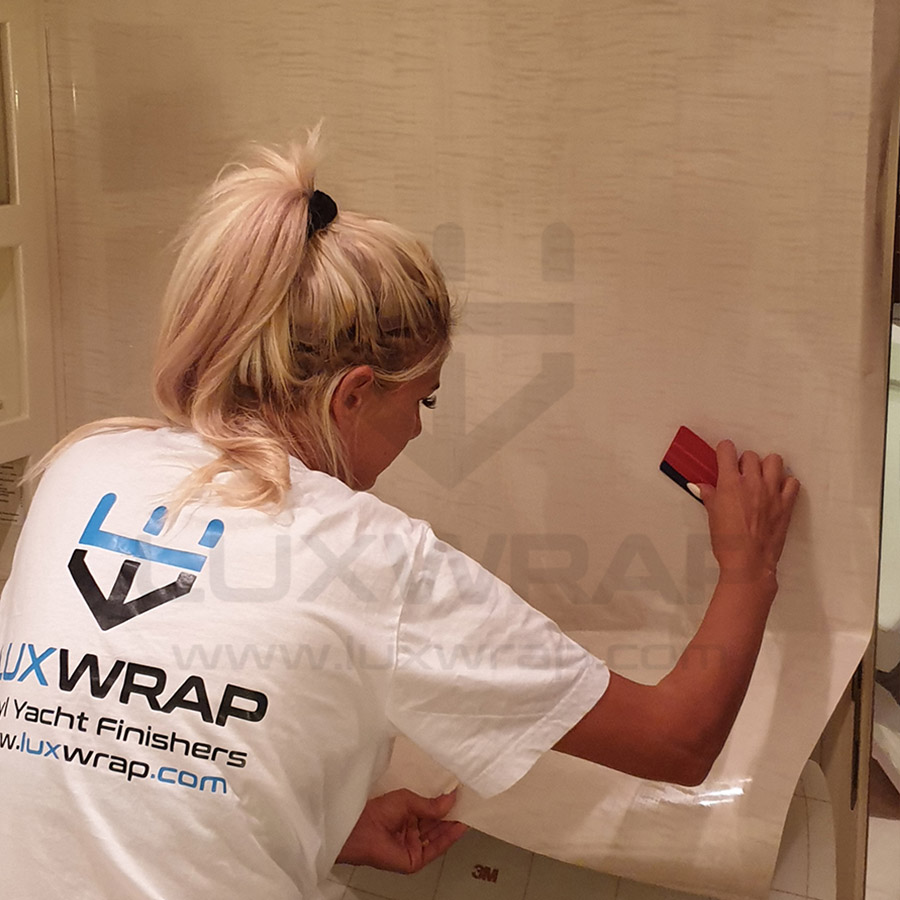
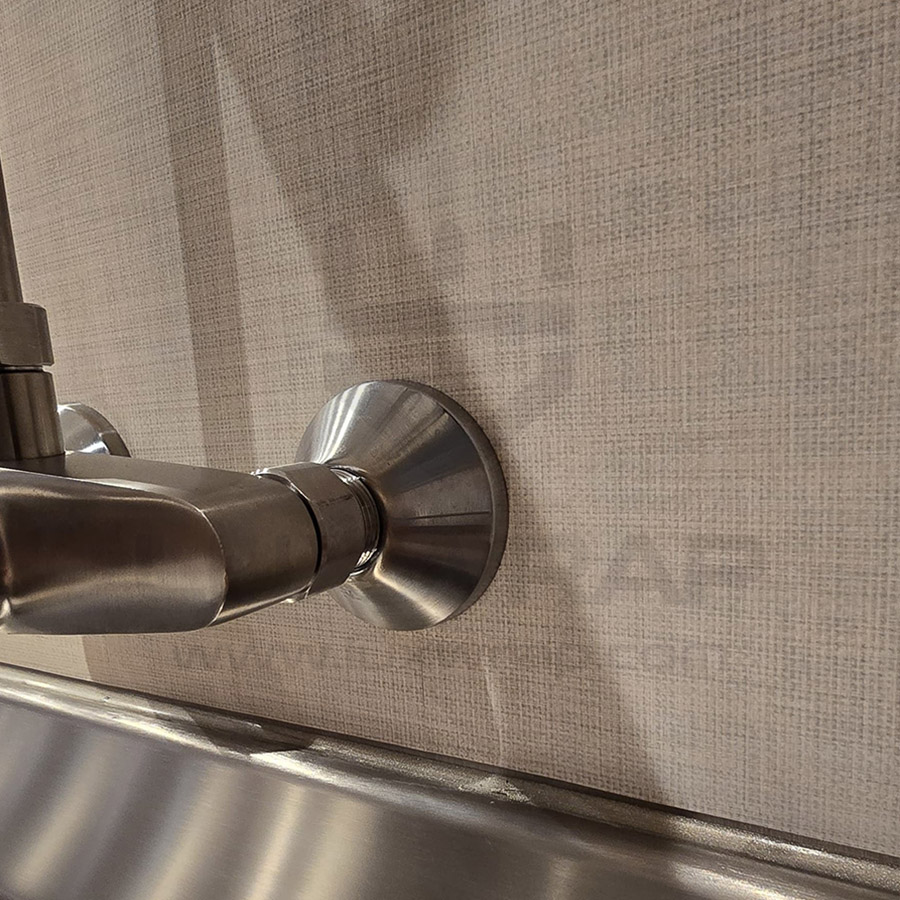
Interior wrapping allows existing surfaces to be refinished with advanced materials that replicate woods, metals, textiles and other finishes. Instead of dismantling large sections of joinery, skilled installers apply precision-cut films directly to the existing substrate, transforming the appearance of interiors quickly and efficiently.
For many projects this approach delivers results comparable to traditional finishing methods while significantly reducing downtime, disruption, and cost.
Read more in our eBook Yacht Wrapping Bible: The Ultimate Guide to Yacht Wrapping by LuxWrap:
Chapter 4 covers interior wrapping techniques, recommended materials, and insider tips for long-lasting refits.
The Fundamentals of Interior Wrapping
Interior wrapping is a surface finishing process where high-performance architectural films — such as 3M DI-NOC and other advanced materials — are applied over existing substrates.
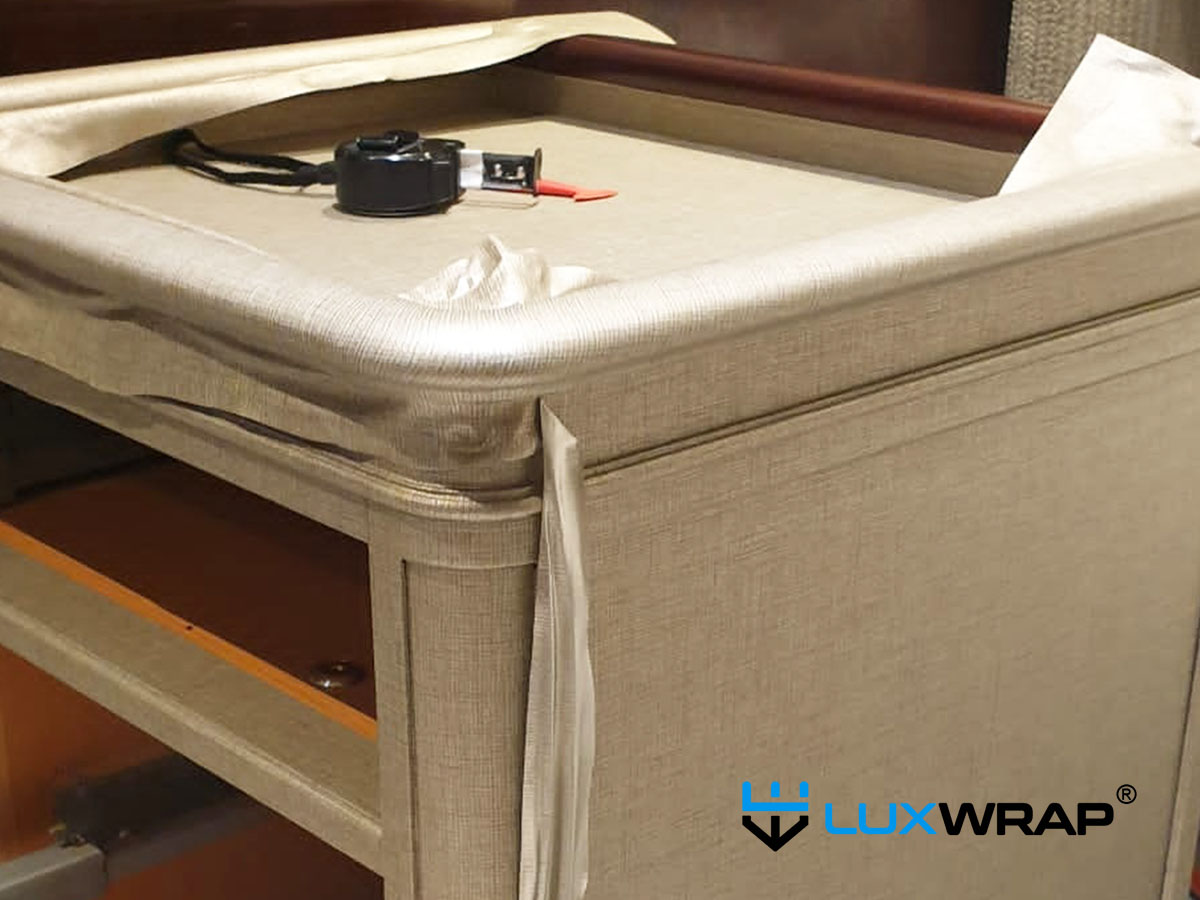
These films can replicate a wide range of finishes including:
- natural wood grains
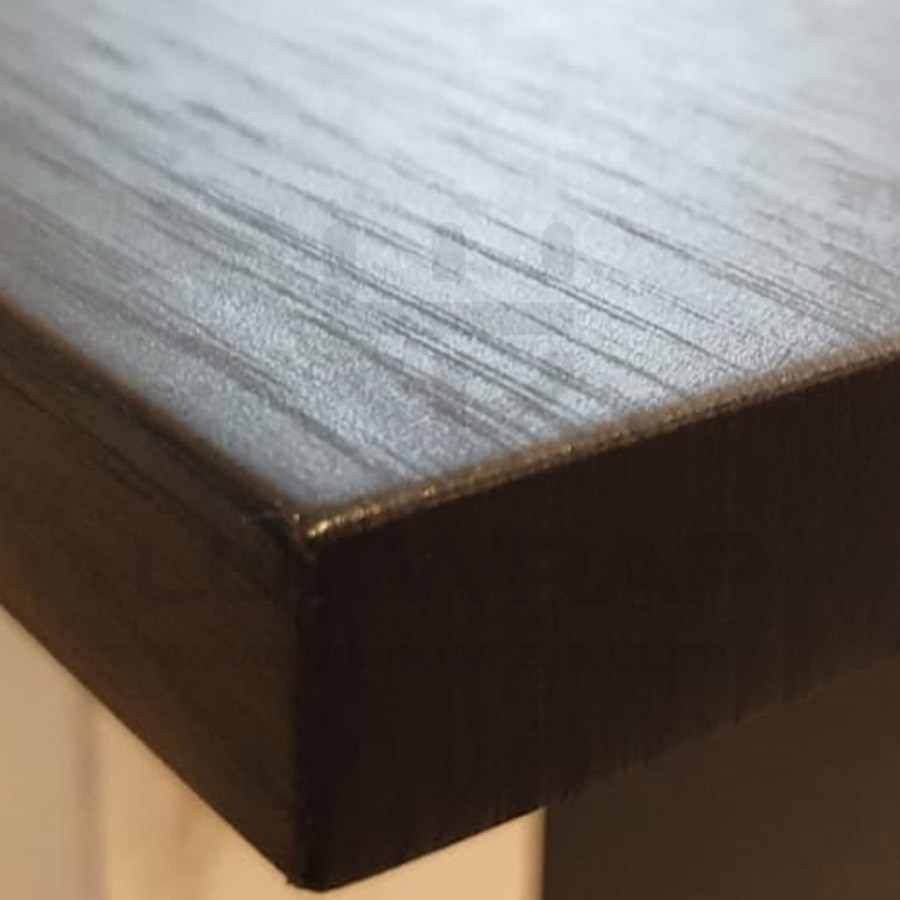
- brushed metals
- leather textures
- stone effects
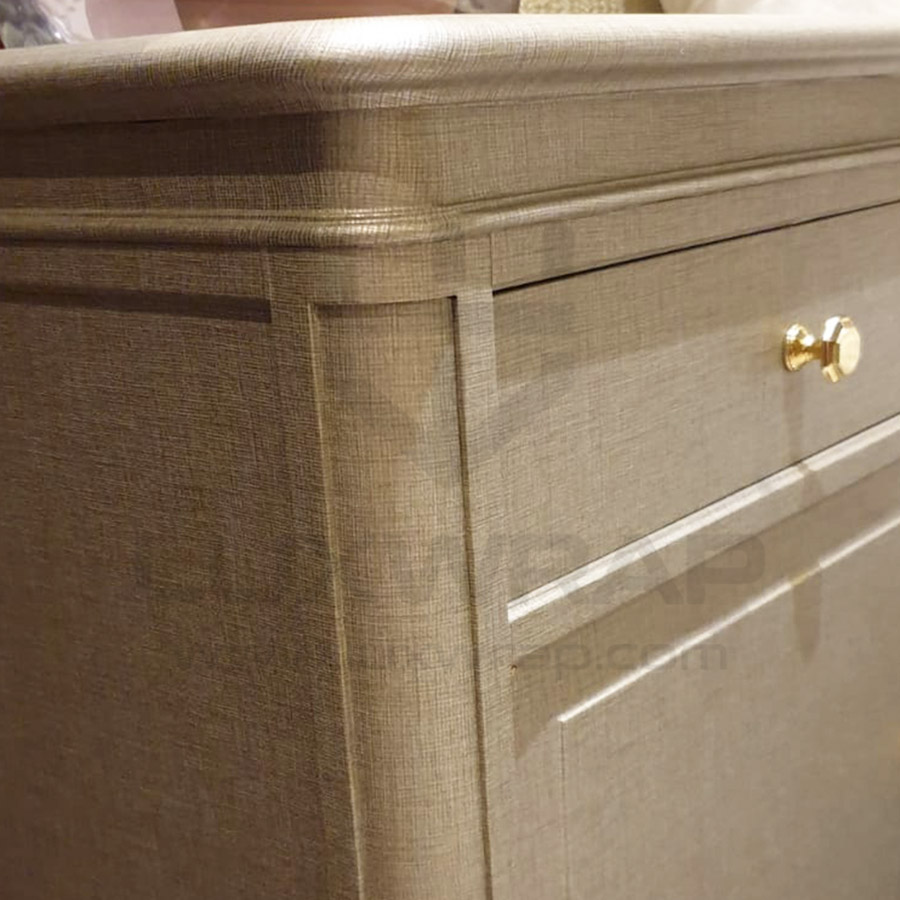
- textiles and contemporary materials
In other cases, interiors may require protection rather than aesthetic transformation. Clear protection films such as paint protection film (PPF) can be installed over existing surfaces to preserve finishes and improve durability while maintaining the original appearance.
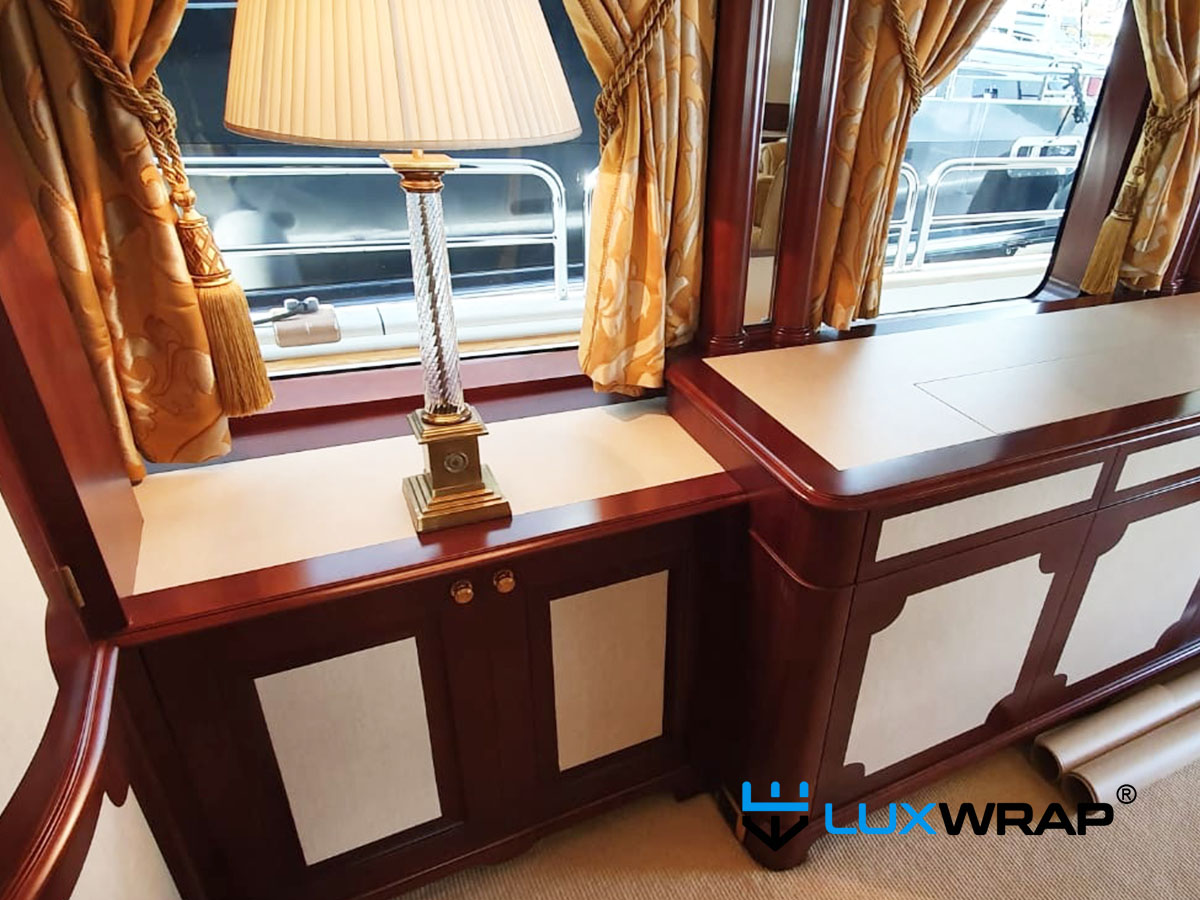
These materials are engineered specifically for demanding environments and offer:
- resistance to abrasion and impact
- protection from water and cleaning chemicals
- stability under UV exposure
- long-term durability with minimal maintenance
Although intended as long-term finishes, these films remain reversible, allowing them to be removed or replaced if required.
Wrapping vs Traditional Interior Refits
For owners, captains and project managers, the decision between wrapping and a traditional refit often comes down to several practical considerations.
Time and Downtime
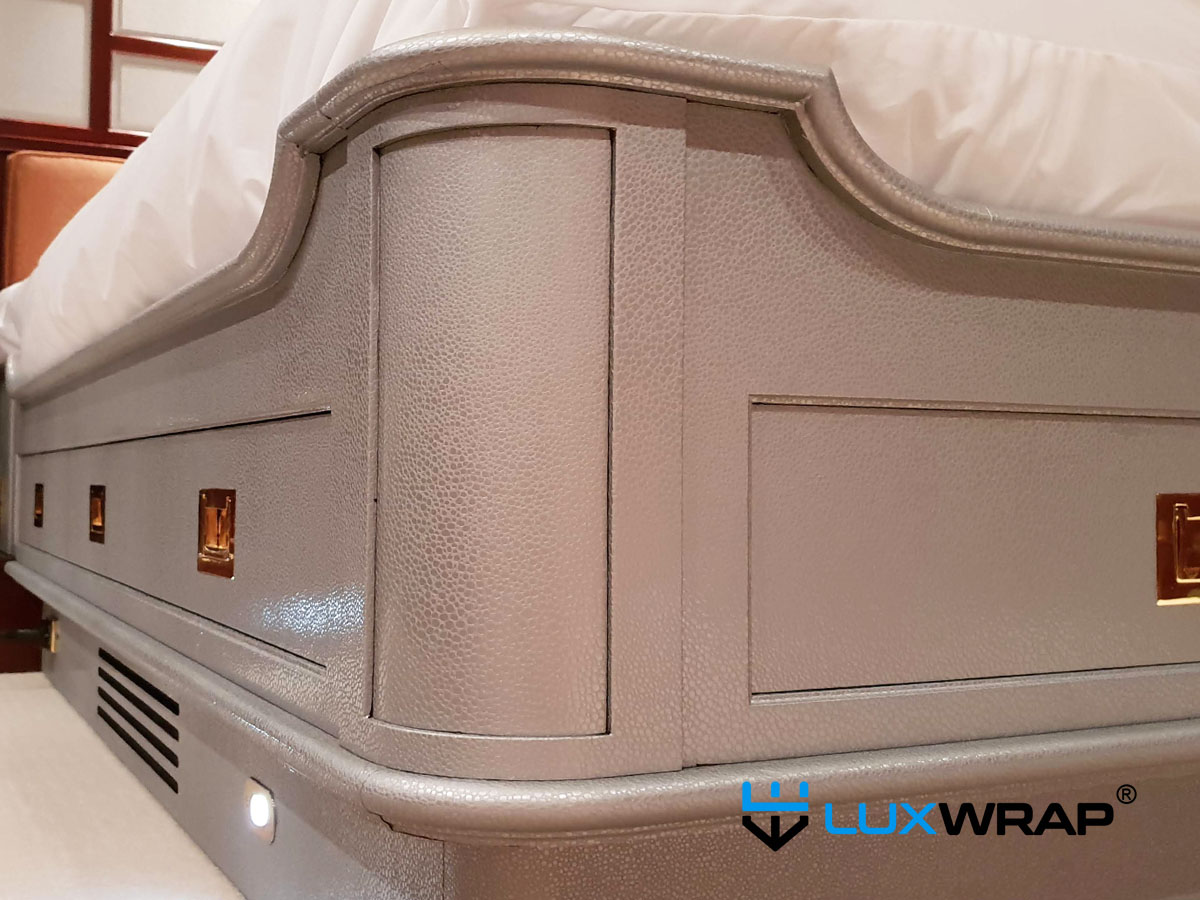
Traditional refits can take months, particularly when specialist joinery or varnishing work is required. During this period a yacht may be unavailable for charter or owner use.
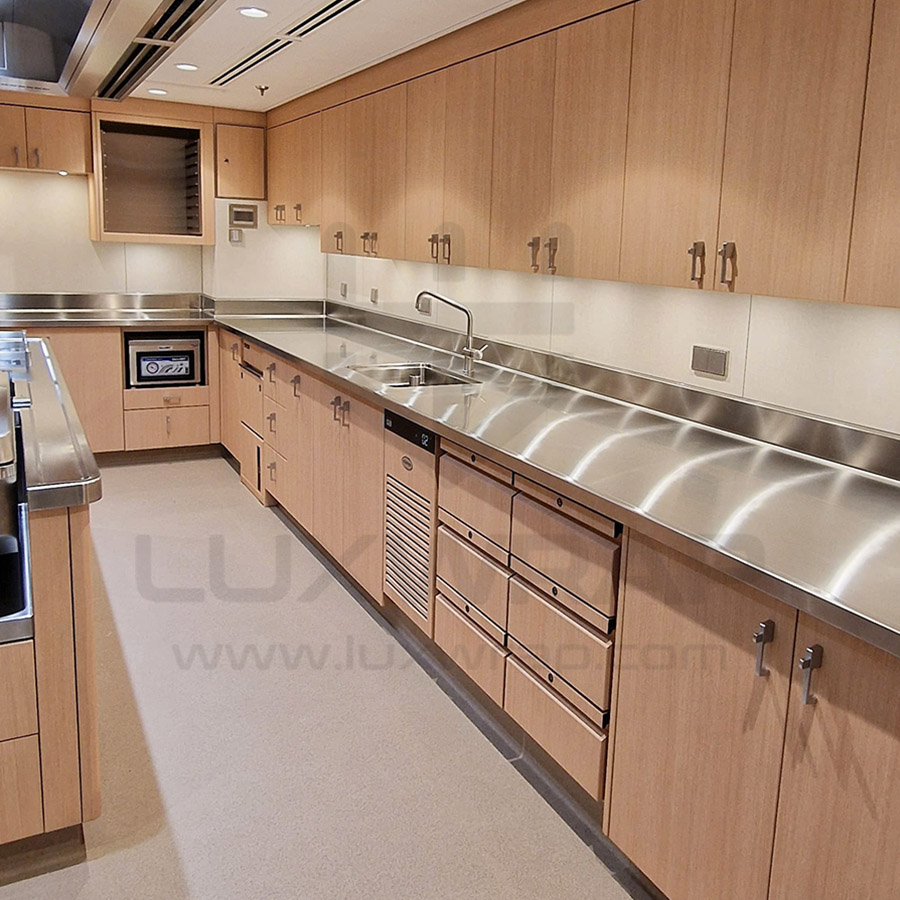
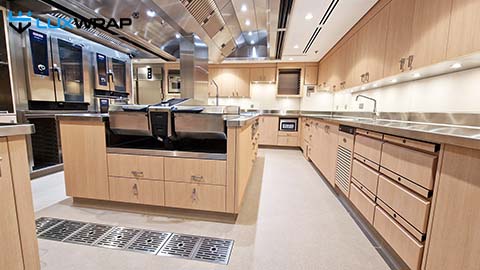
Interior wrapping projects can often be completed in days or weeks rather than months. Even large areas such as commercial galleys or crew spaces can be transformed quickly while minimising operational disruption.
Cost Efficiency
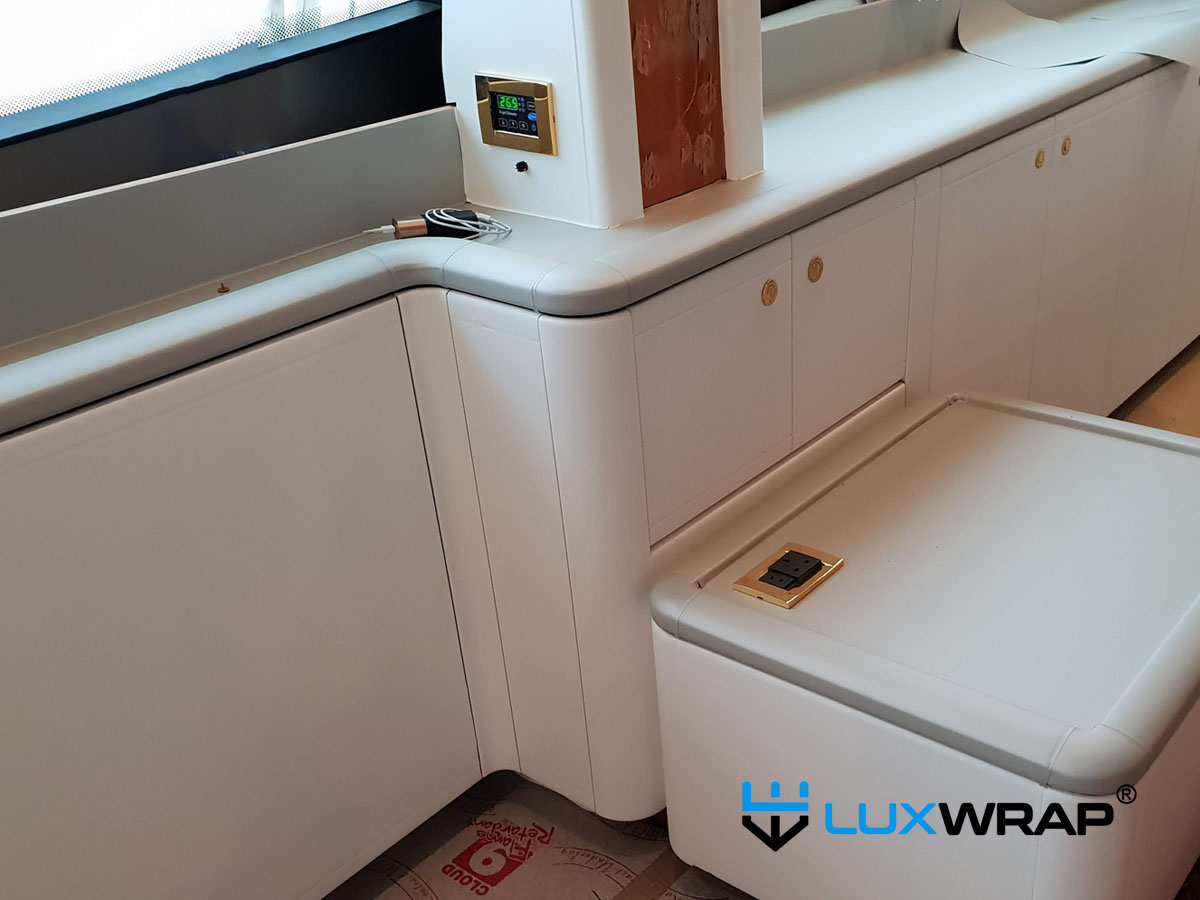
Refitting requires skilled carpenters, varnish specialists, painters and multiple contractors, all of which increase costs.
Wrapping typically represents a fraction of the cost of traditional refits, particularly where existing joinery remains structurally sound and only surface finishes require updating.
Disruption Onboard
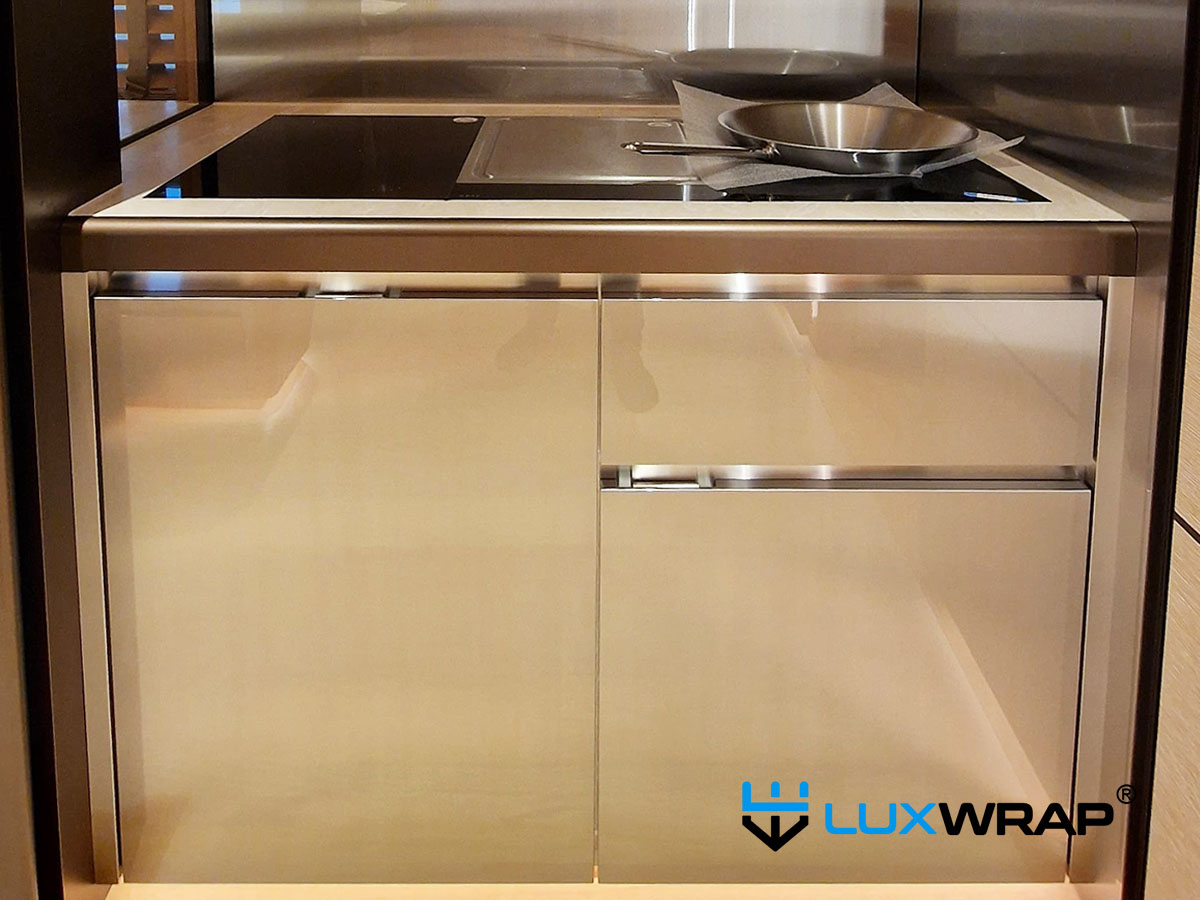
Refit projects involve sanding, dust, solvents and heavy equipment. Work often needs to be undertaken in shipyard environments with extensive preparation.
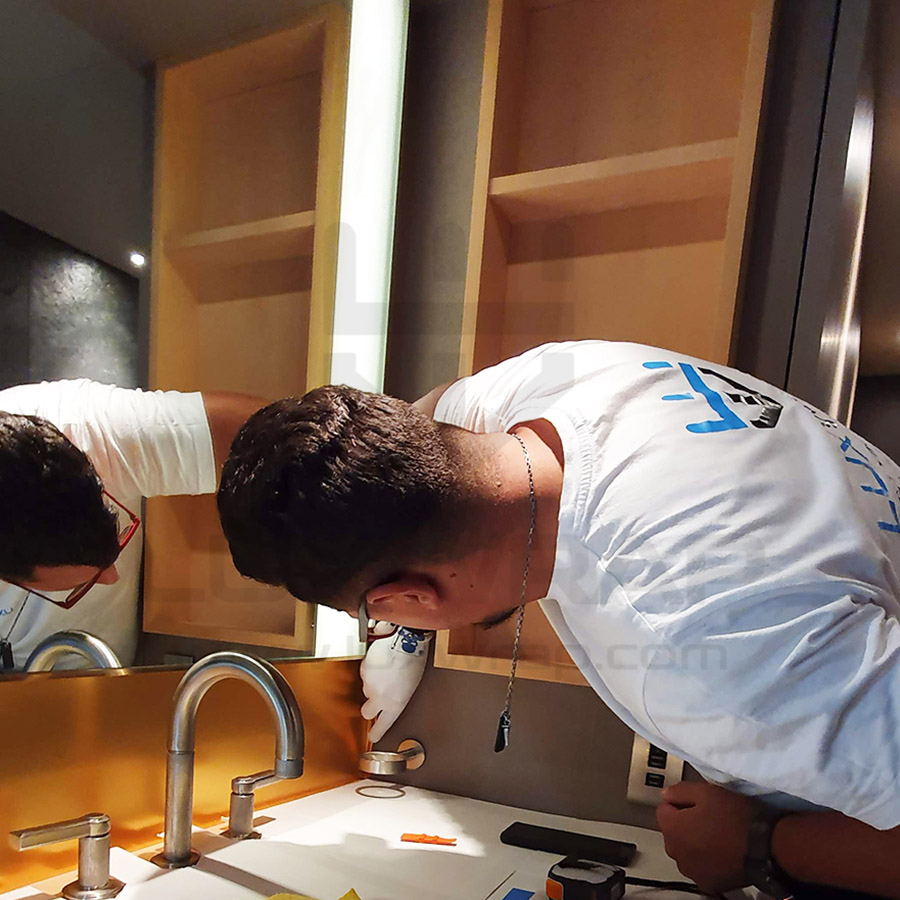
Wrapping is a far cleaner process requiring minimal tools, producing little noise or dust, and allowing work to proceed even while other operations continue onboard.
Design Flexibility
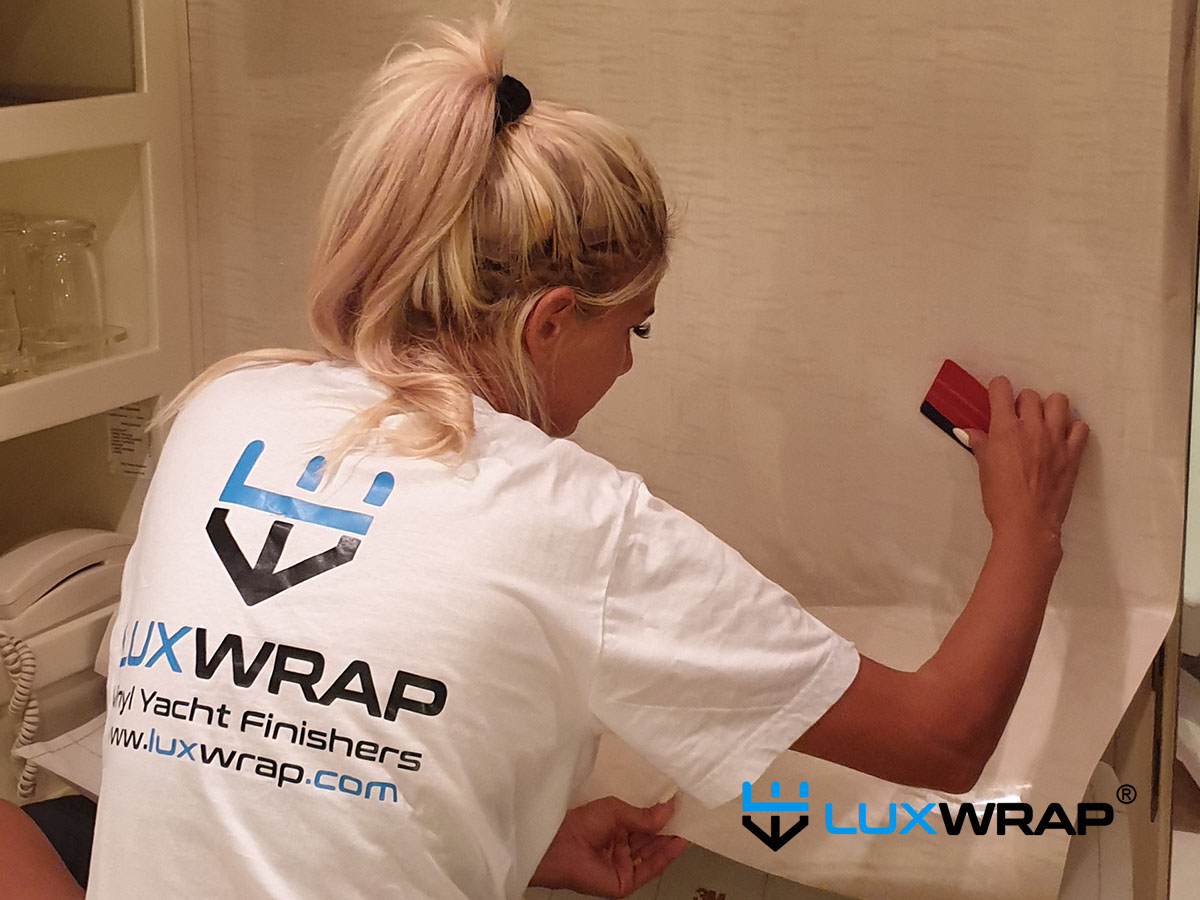
Architectural films offer extraordinary design freedom. Hundreds of finishes are available across the market, allowing interiors to be transformed with:
- exotic woods
- metallic textures
- leather effects
- stone and textile finishes
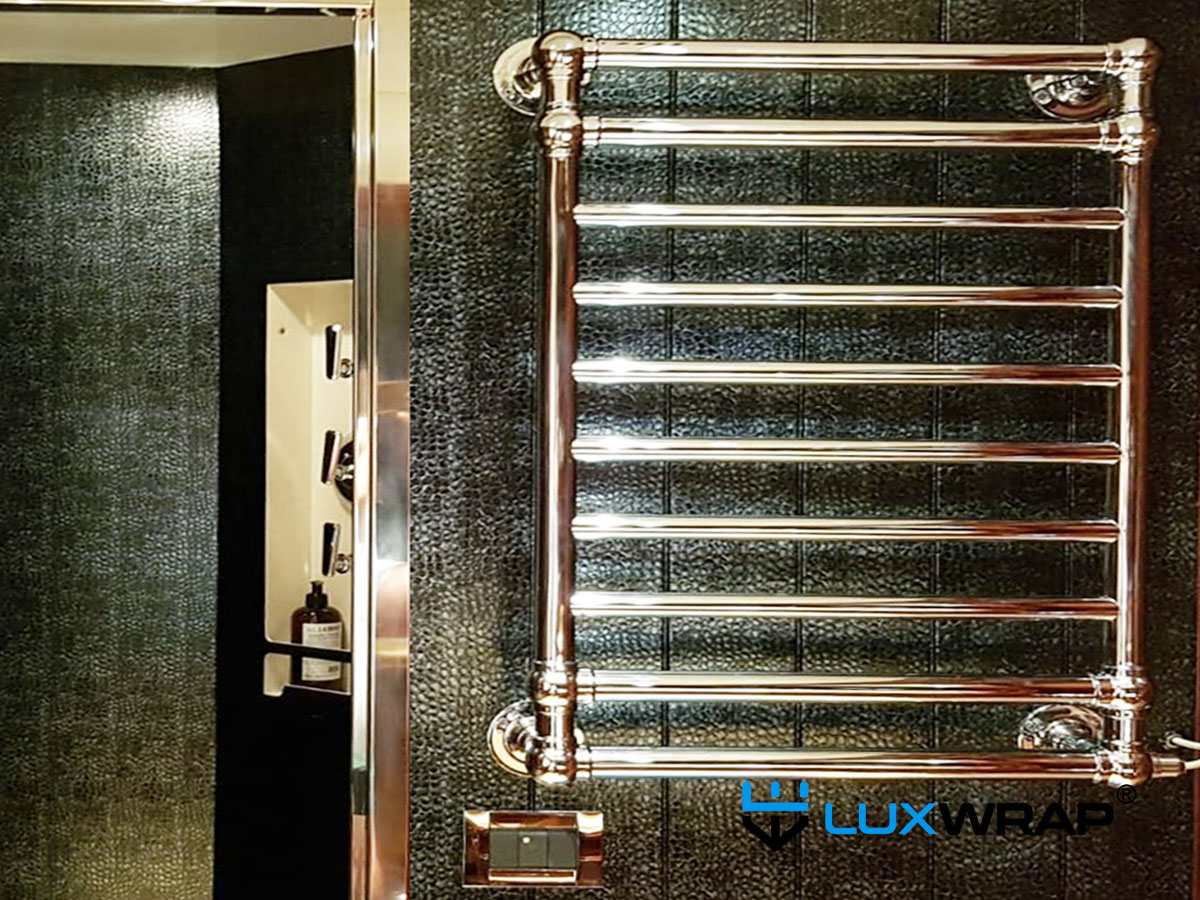
This flexibility allows owners and designers to create completely new aesthetics without rebuilding the interior structure.
Typical Interior Wrapping Applications
Interior wrapping can be applied across a wide range of yacht surfaces, including:
- wall panels and decorative joinery
- furniture and cabinetry
- doors and drawer fronts
- tables and worktops
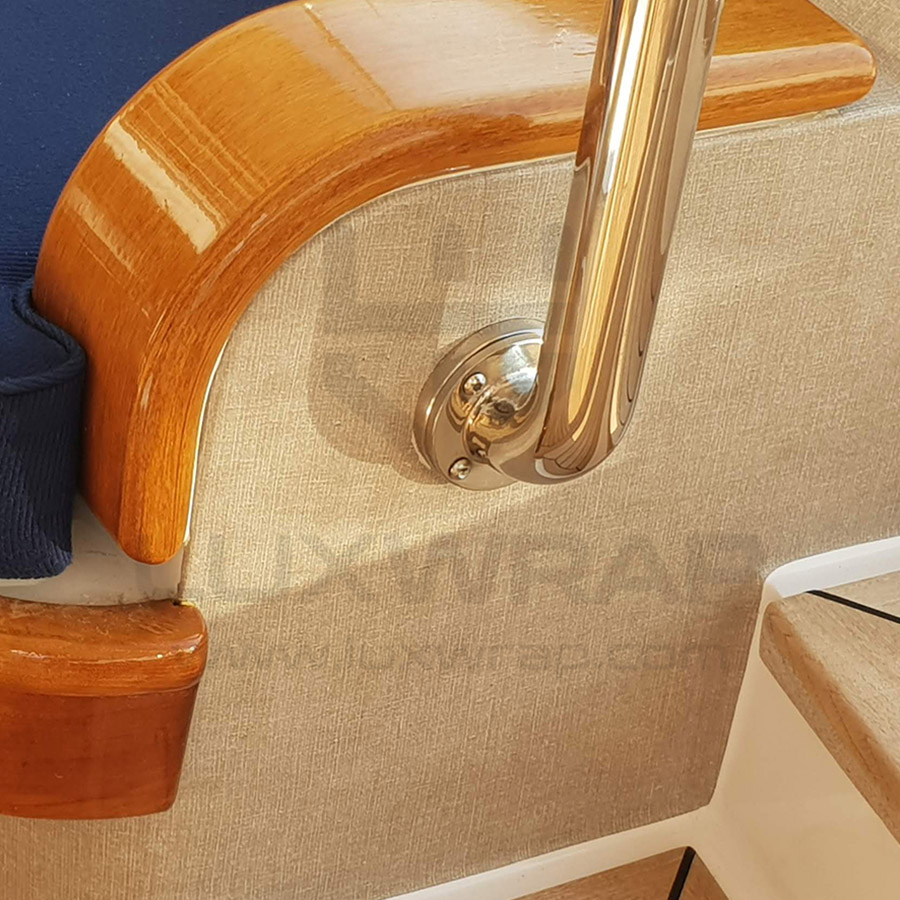
- staircases and railings
- overhead panels and ceilings
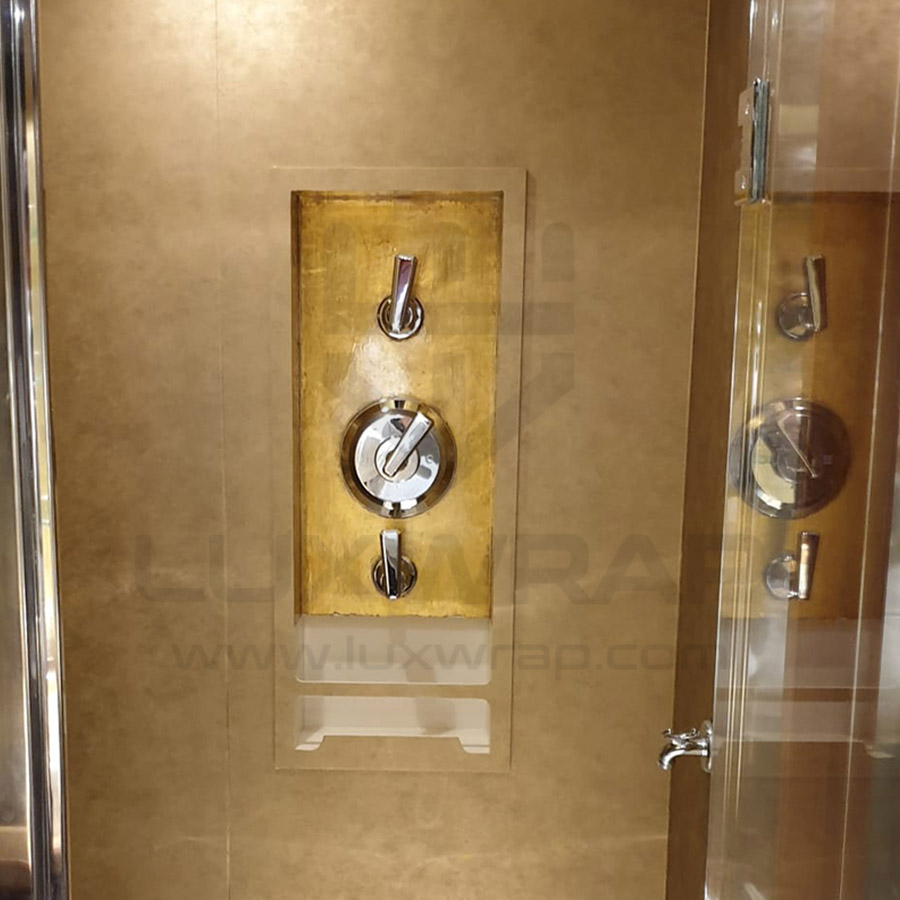
- shower panels and wet areas
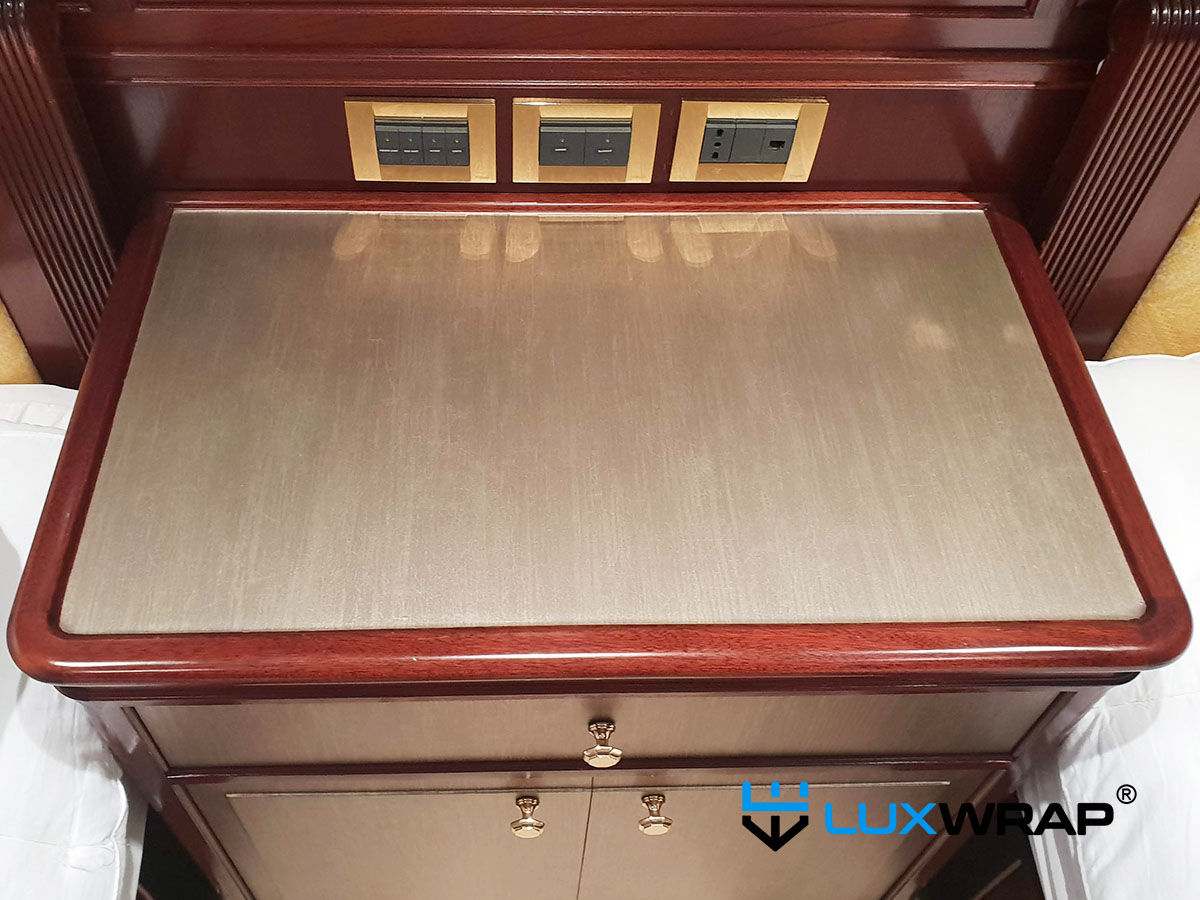
Interior wrapping allows varying levels of transformation depending on the objectives of the project.
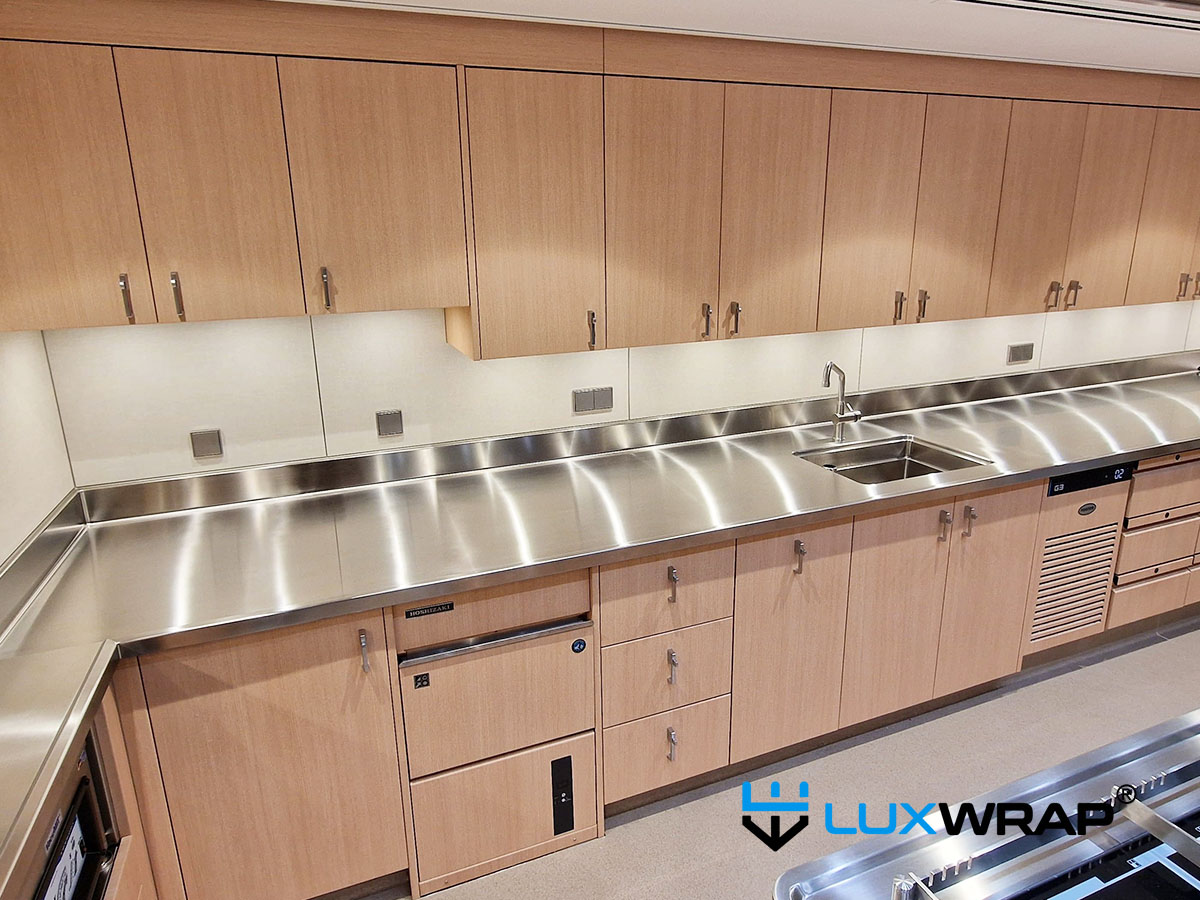
Specialised application areas include:
- Laundry and Lift Surface Protection
These areas benefit particularly from durable finishes that resist scratches, impacts and heavy use.
Quick Facelifts: Older interiors can be refreshed by wrapping selected elements such as door faces, cabinetry panels or furniture surfaces, introducing modern finishes while preserving existing joinery.
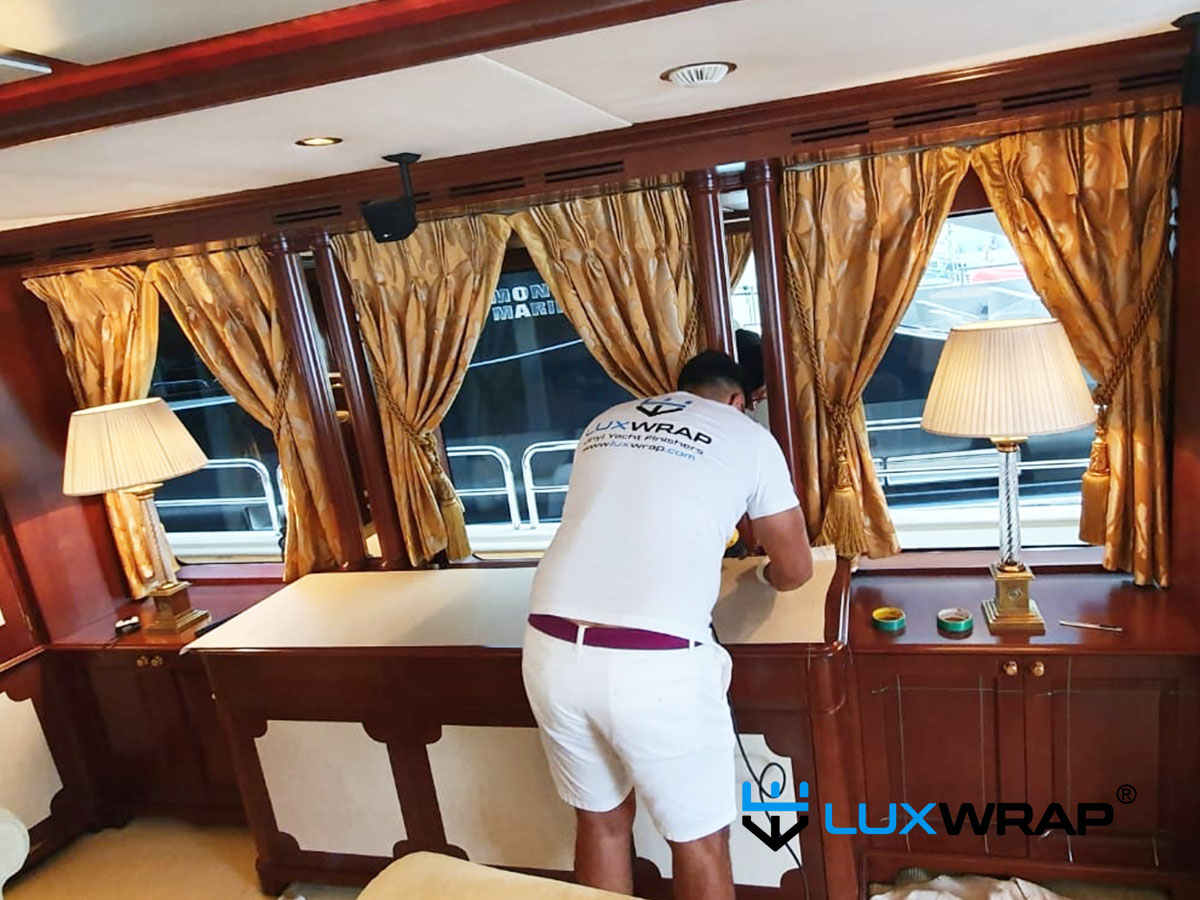
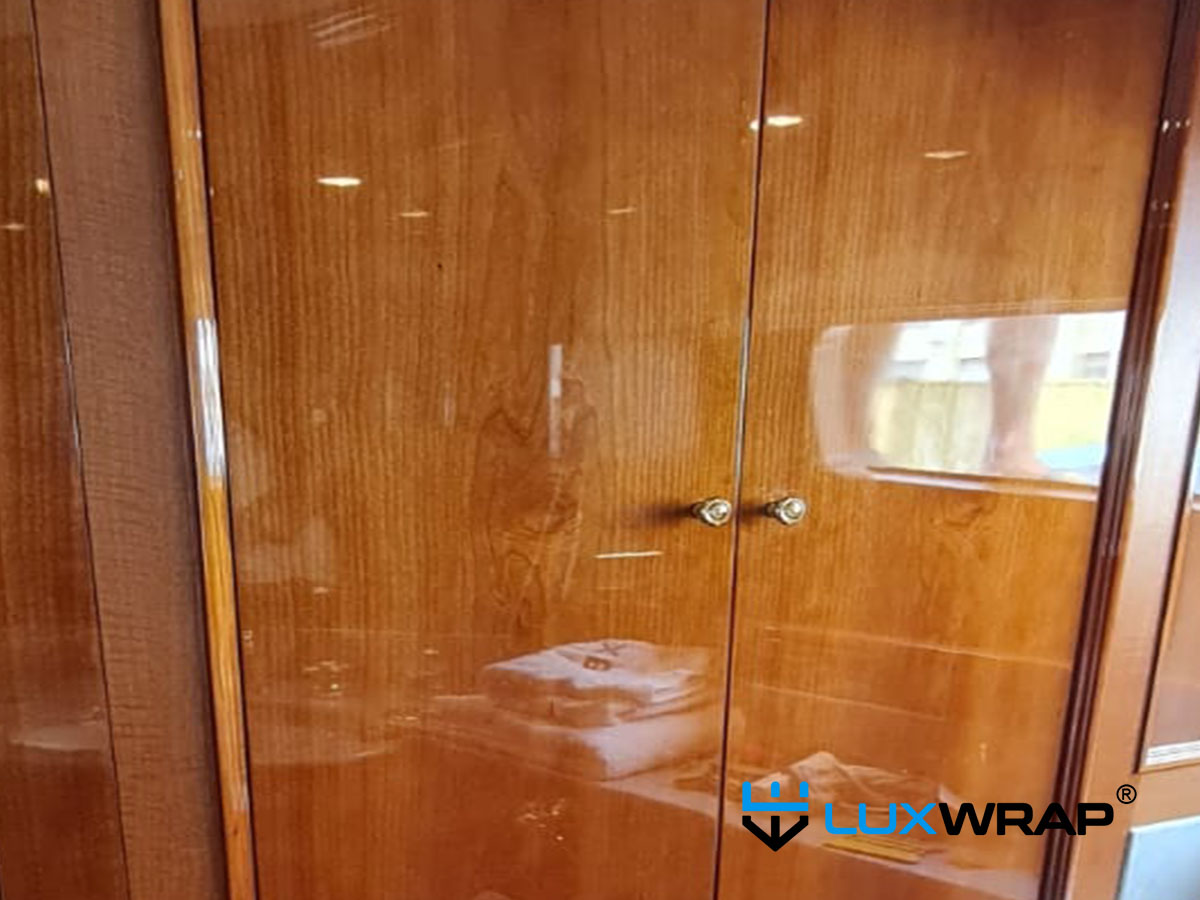
Subtle Refreshes: Where varnish has faded or become cloudy, architectural films can replicate wood grains with remarkable realism while improving durability.
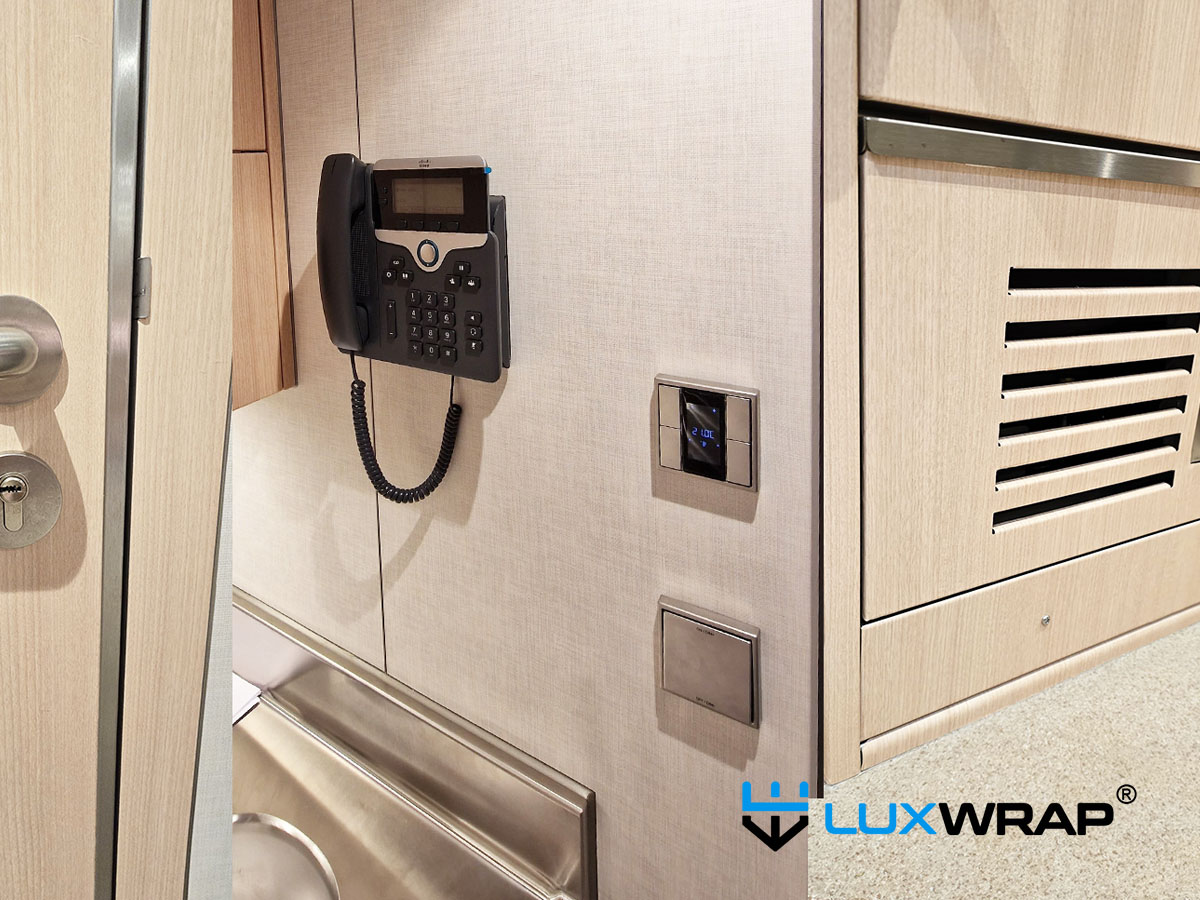
Complete Interior Transformations: For new owners seeking a dramatic change in style, wrapping allows large areas of the interior to be redesigned. Entire cabins, salons, and corridors can adopt new textures and colour palettes without structural reconstruction.
- structural changes or layout modifications are planned
- substrates are severely degraded or unstable
- original materials must be preserved for historical authenticity
Technical Considerations
Interior wrapping is highly effective in most situations, but there are circumstances where traditional refitting remains necessary.
Refitting may still be required when:
As with any specialist process, installation quality is critical. Professional expertise ensures pattern alignment, seamless joins, and long-term performance.
A Practical Evolution in Yacht Interior Refurbishment
Interior wrapping represents a significant evolution in the way yacht interiors can be refreshed or transformed.
By applying advanced architectural films over existing substrates, it allows yachts to achieve modern finishes with dramatically reduced downtime, lower costs, and minimal disruption.
Traditional refits will always have a role when structural changes are required. However, for many aesthetic transformations and refurbishment projects, interior wrapping offers a highly efficient and technically robust alternative.
LuxWrap® is a leading specialist in superyacht wrapping and surface protection, delivering projects for new-build and operational vessels worldwide. If you would like to discuss a potential project or request a quotation, please contact us.
📞 Contact LuxWrap
Tel: +44 (0)208 068 7468
🌐 www.luxwrap.com
Interior Examples